
CPaaS started as a quick way to send an SMS from code. Today it runs SMS, WhatsApp, RCS, and flash calls as one system.
A backup route takes over when a provider fails. That shift is how omnichannel communication is reshaping the global business messaging market.
A customer gets a delivery update by SMS. She asks a follow-up question on WhatsApp.
The next morning, her login code arrives as a flash call. To her, it is one conversation with one brand.
Behind the scenes, it can take three channels and five providers. Each country she visits needs its own routing decision.
That gap between what customers see and what businesses manage explains the evolution of CPaaS.
The cheapest SMS route matters less than it used to. The platforms that win now make many channels behave like one.
From SMS APIs to platforms: how CPaaS got here
The first generation of Communications Platform as a Service was simple and powerful.
Developers could send an SMS or make a call with a few lines of code. Before that, a business had to sign deals with carriers one by one. Startups could now add login checks and reminders to a product in an afternoon.
The second wave added breadth. Providers added email, video, number masking, and contact center tools. Each wanted to be a one-stop shop.
For many businesses, this meant leaning harder on a single vendor. When that vendor was weak in a country, the business was weak there too.
The third wave is happening now. It is about picking the right path for every single message.
For each one, the system picks a channel and a provider route. The goal is to reach this person right now.
Why omnichannel became the default
Four changes pushed the market in this direction at the same time.
Customers spread across apps
In some regions, WhatsApp is the default way people talk to businesses. In others, Viber or Telegram carries more weight. In many markets, SMS is still the most universal fallback.
A global brand using one channel serves some users worse than others.
Channels got richer
Business messaging apps now support branded profiles, buttons, and replies in both directions. RCS picked up speed after Apple added it to iPhone Messages in iOS 18.
That update came out on September 16, 2024. Apple says RCS gives richer media and more reliable group chats than SMS and MMS.
Each new channel is a new way to reach people. It is also one more connection your team has to keep working.
SMS got harder to send
Many countries now require sender ID registration. Carriers filter message content and apply stricter fraud rules.
Sending a plain text across dozens of countries now takes real operating skill. A route that performs well one quarter can get worse the next.
Teams often find out only when users ask where their codes went.
Channel prices keep moving
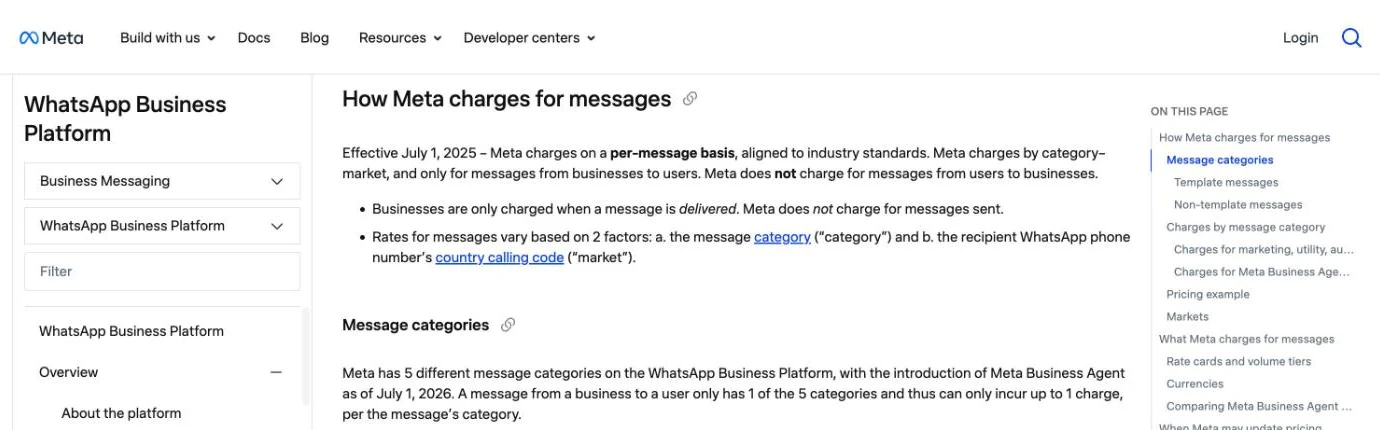
Prices now change on a schedule. Meta has charged for WhatsApp business messages per delivered message since July 1, 2025.
Under its own rules, Meta can change prices on the first day of any quarter. That allows up to four changes a year.
On October 1, 2026, Meta started charging again for some replies to customers.
Service replies had been free since November 1, 2024. Utility replies inside an open chat had been free since July 1, 2025.
 A budget built on last year's rates can be wrong within a quarter. Teams with more than one channel can move traffic when one channel gets pricier.
What omnichannel changes for businesses
Omnichannel is often described as being everywhere. In practice, it changes how teams plan and run messaging.
Each use case gets its own channel plan. A one-time password needs speed and certainty. A promo campaign needs reach and clicks.
A support chat needs replies going both ways. Each of these may work best on a different main channel.
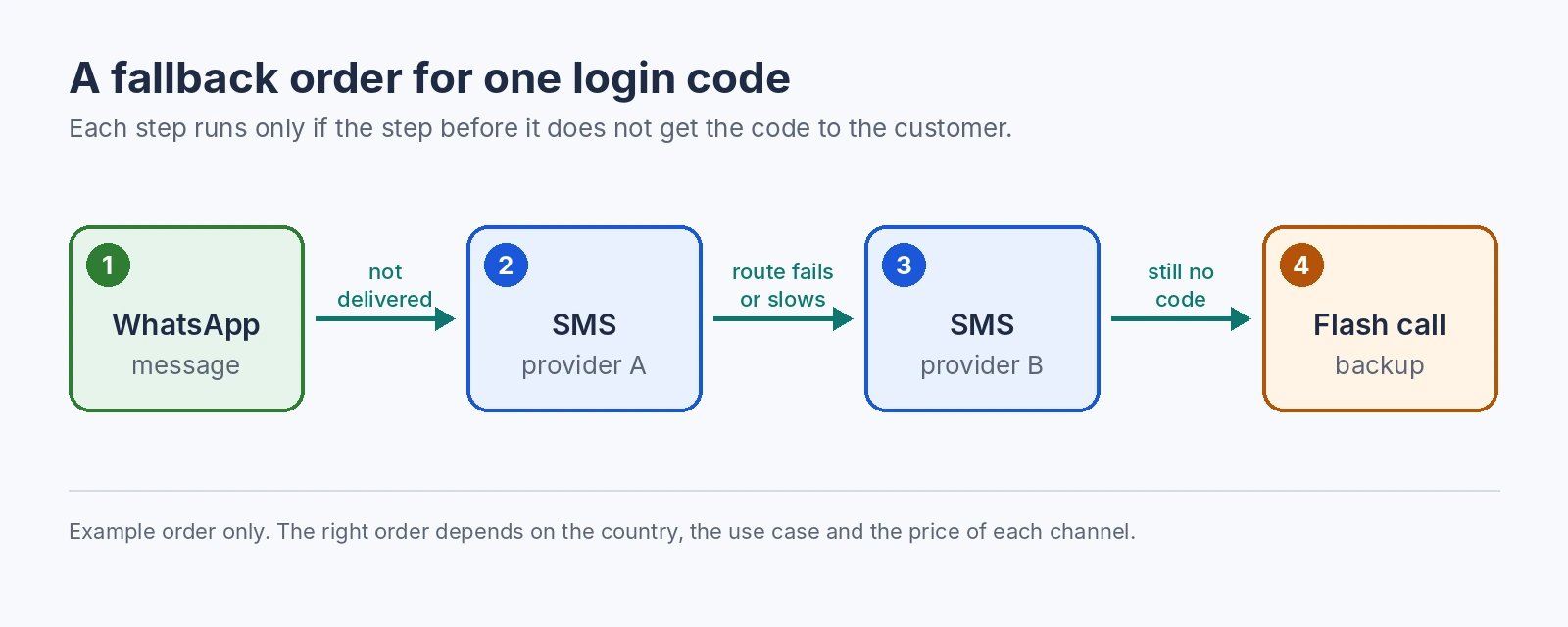
Fallback is planned from day one. Say a messenger alert goes unread or an SMS fails. The system then tries the next best option on its own.
For login codes, some businesses use flash calls as a backup to SMS.
Data lives in one place. When delivery data and cost data sit in separate tools, nobody can answer basic questions.
One example is "what does a successful login cost us in Brazil?"
Omnichannel only works when reporting covers every channel and provider.
Costs come down with better choices. With several options per message, a business can pick the cheapest route that still delivers well.
Paying one vendor's rate everywhere is the expensive default. Checking numbers before sending saves more. Paying to message an inactive phone is wasted money.
The rise of the aggregation layer
As channels multiply, a new type of platform has appeared between businesses and their providers. It sits on top of the vendors a business already uses.
It joins their channels and routes them into one control point.
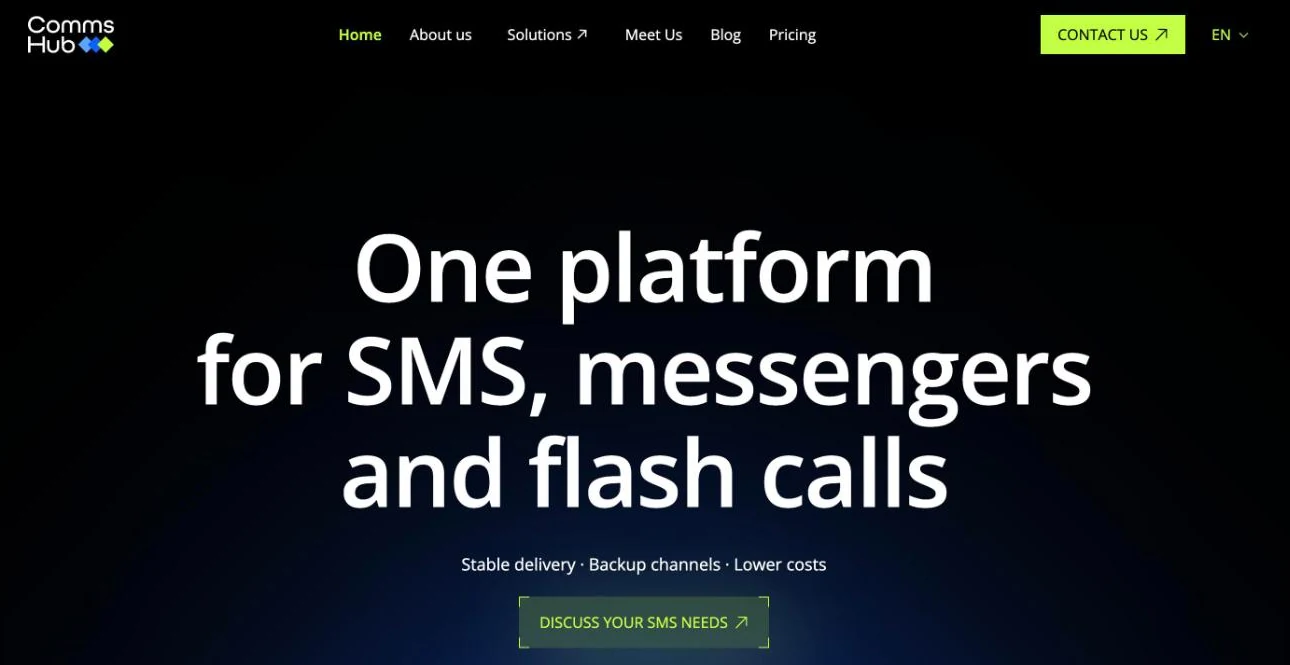
CommsHub is one example of this model. It brings SMS, flash calls, and messengers such as WhatsApp, Viber, and Telegram together.
It works across multiple telecom providers. Backup routes take over when a provider fails or slows down.
One dashboard shows delivery, spend, and status. Its homepage lists 20+ verified providers and 190+ countries.
Businesses keep their current providers and gain backup routes and one clear view.
 This approach reflects a broader shift in the CPaaS market. Companies want more control over their providers and less lock-in.
They treat each vendor as one route among several. The same idea keeps connected devices online.
What to look for in a modern CPaaS setup
You might build in-house, use one CPaaS vendor, or add an aggregation layer. Either way, these questions show where you stand:
Channel coverage: Do we support the channels our users prefer in each key market?
Automatic fallback: When a message fails, does the system retry on another route by itself?
Provider backup: Can we survive a provider outage without users noticing?
Checks before sending: Do we check numbers first to avoid paying for dead ones?
One view of results: Can we see delivery and cost for every channel in one place?
Compliance: Are sender IDs, templates, and opt-ins handled correctly in each country?
Flexibility: How fast can we add a channel or switch providers in a market?
When several answers are "it depends who you ask," the setup probably grew by accident.
Nobody ever designed it to work as one system.
Common questions about CPaaS today
Is SMS still worth using for login codes?
Yes. SMS is still the most universal fallback. It works well as the main channel or as the backup.
Many businesses try a messenger first, then SMS or a flash call.
Do I have to replace my current SMS provider to add backup routes?
No. An aggregation layer sits on top of the providers you already use. CommsHub, for example, adds backup routes across your current providers.
How often can WhatsApp Business message prices change?
Up to four times a year. Meta's pricing page lists four possible dates: January 1, April 1, July 1, and October 1.
Does Meta charge when a customer messages a business on WhatsApp?
No. Meta's pricing page says it does not charge for messages that users send to businesses.
Businesses pay for the messages they send, and only once those messages are delivered.
Where business messaging is heading
Customers expect brands to reach them on their favorite channel, at the moment it matters. Platforms will compete less on raw message volume.
They will compete more on picking the right channel and timing for each message.
For global businesses, the lesson is simple: stop treating messaging as separate pipes.
Run it as one system, with backup routes and shared data built in.
Start with the checklist above, and fix the first question your team can't answer today.