ClickUp is the strongest free pick, since its free plan has no member cap at all. Asana wins if your team has outgrown boards and needs real timelines and rules. TeamGantt is the pick if the work you manage is actually a schedule, not a to do list.
Trello's free Workspaces have been capped at 10 collaborators since April 2024, and I found out the hard way. I was running three small client boards under one free Workspace, added a fourth freelancer to help with a launch, and got blocked from adding anyone else until I upgraded or removed someone.
A thread of verified reviews on G2 shows I'm not the only one hitting walls like this: Trello holds a strong 4.4 out of 5 across more than 14,000 reviews, but "limited features" and "crowded boards" are two of the most repeated complaints once a team grows past a handful of people.
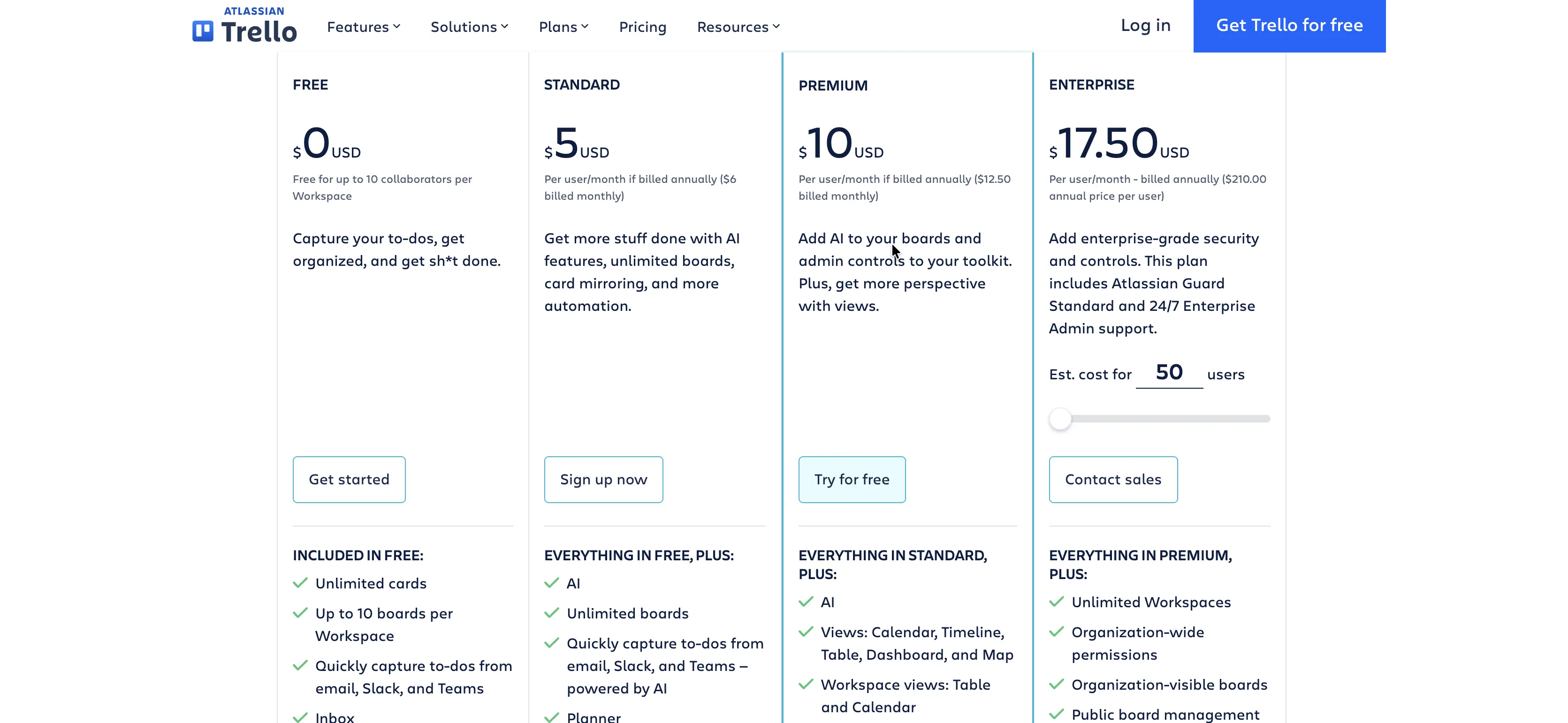
That sent me back to Trello's own numbers. The Trello pricing page lists Standard at $5 a user a month billed annually, Premium at $10, and Enterprise at $17.50, all on top of a free plan that Atlassian itself confirmed would cap out: "Free Workspaces in Trello will soon be limited to 10 collaborators," the company wrote on its own blog back in March 2024.
I spent a week pulling the current pricing page for twelve Trello alternatives, rebuilding the same three board client setup inside four of them to see which ones actually solve the cap problem instead of just moving it somewhere else. Pricing and features below were verified 6 August 2026 from each tool's official pricing page.
Why look for Trello Alternatives in the first place
Trello alternatives are project and task management tools that keep the drag and drop board Trello popularized, without its free plan collaborator cap or its per seat price jumps once a checklist stops being enough. Beyond the 10 person free cap, three complaints keep repeating: boards get cluttered past a hundred cards, native reporting stays thin unless you add a paid Power Up, and dependency tracking between cards barely exists without a separate tool.
A quieter shift happened on the competitor side too. Asana's free Personal plan, long a home for small teams, was cut down to just two users total in 2026, which changes the free plan math for anyone comparing Trello against Asana rather than Trello against itself.
If you've also looked at Zenkit, it sits in the same lightweight kanban category as Trello but wasn't part of this test, since it's a smaller, less reviewed tool worth checking directly if it's on your shortlist. Trello isn't unusual here; free plan seat caps run from 2 people to 20 across the best project management software in 2026, which is why two tools that look equally free can cost very different amounts at team number eleven.
The 12 best Trello Alternatives, Ranked
1. Asana
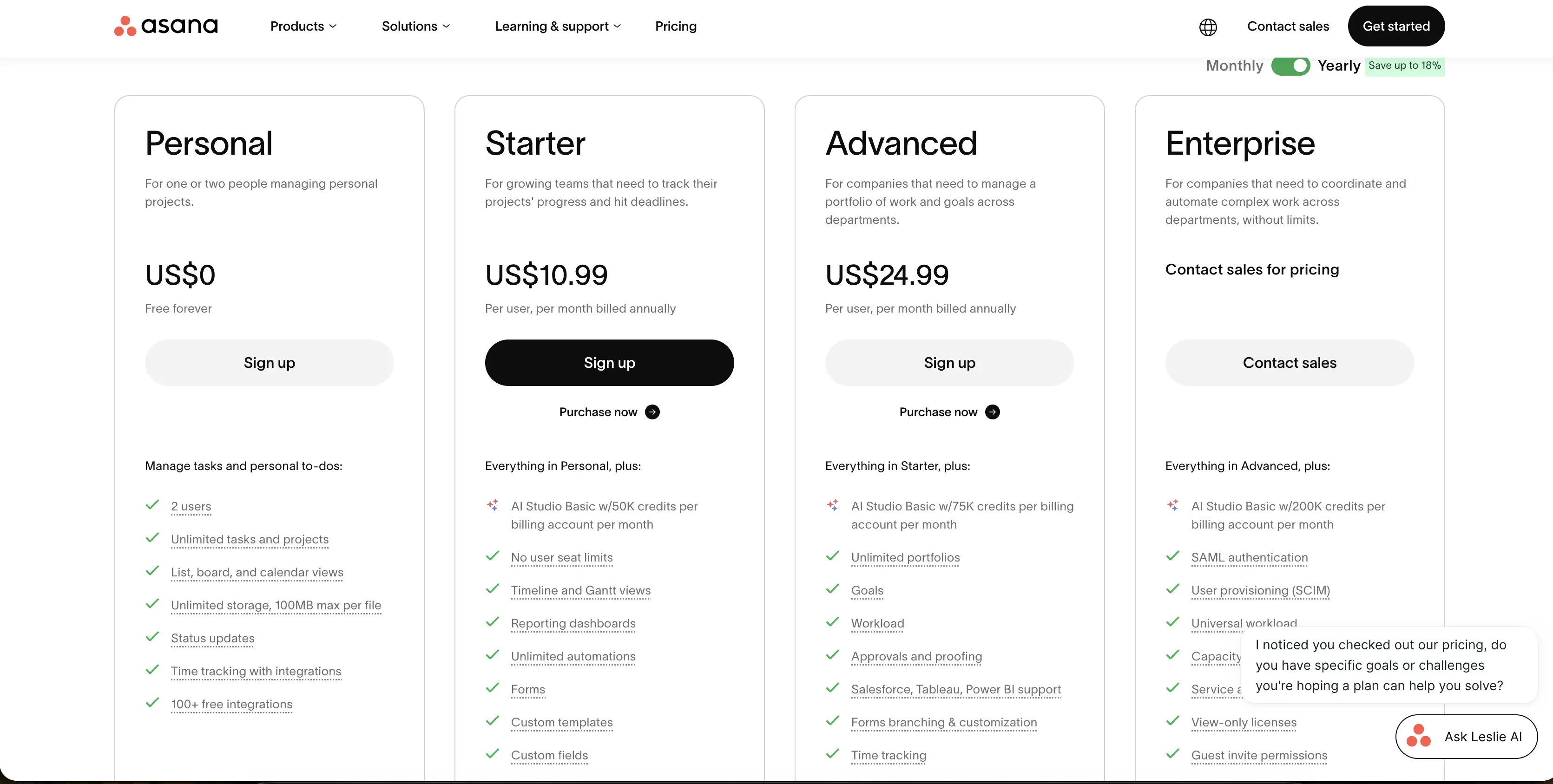
Price: Starter $10.99 a user a month, billed annually (2 seat minimum). Free plan: yes, capped at 2 users. Best for: teams that have outgrown boards and need real timelines, not just cards.
Asana pairs a kanban board with a timeline view, custom fields, and rules that fire automatically, none of which Trello does without a Power Up. The official Asana pricing page confirms seats sell in blocks above five users, so a team of six can end up paying for ten.
2. ClickUp
Price: Unlimited $7 a user a month, billed annually. Free plan: yes, unlimited members, 60MB storage. Best for: teams that want a real free plan with no member cap.
ClickUp's Free Forever plan has no cap on the number of people you can add, the exact problem Trello's 10 collaborator wall creates, though storage tops out at 60MB. The ClickUp pricing page shows Business at $12 a user adds Google single sign on and 25,000 monthly automations, with AI as a separate $9 a user add on at every tier.
3. monday.com
Price: Basic $9 a seat a month, billed annually, 3 seat minimum. Free plan: yes, capped at 2 seats. Best for: non technical teams that want colorful, visual boards over a plain kanban layout.
monday.com trades Trello's plain board for color coded columns that read like a spreadsheet, but automations only turn on at Standard, $12 a seat, and every paid plan carries a three seat minimum, so a two person team still pays for three.
4. Notion
Price: Plus $10 a member a month, billed annually. Free plan: yes, single user unlimited, capped for teams. Best for: teams that want boards and written documentation living in the same tool.
Notion's board view sits inside the same workspace as its docs and wikis, so a launch plan and the board tracking it never live in two separate apps, and Business at $20 a member bundles SAML single sign on rather than billing it separately.
5. Wrike
Price: Team $10 a user a month, billed annually, 2 to 15 users. Free plan: yes, essential task management only. Best for: teams that need interactive Gantt charts and approval chains, not just cards.
Wrike's board view looks close to Trello's, but Team tier adds an interactive Gantt chart and shareable dashboards Trello only reaches through third party Power Ups. The Wrike pricing page confirms Business, at $25 a user, covers 5 to 200 users with AI features included.
6. Basecamp
Price: Pro $15 a user a month, or Pro Unlimited at a flat $299 a month billed annually for unlimited users. Free plan: yes, 1 project, up to 20 users. Best for: agencies that want one predictable bill instead of a per seat number that climbs every quarter.
Basecamp's Card Table view is its answer to Trello's board, bundled with message boards and group chat in every plan rather than sold as separate modules. A 25 person team pays $3,588 a year on Pro Unlimited regardless of headcount, undercutting most per seat competitors here past 15 or so people.
7. Smartsheet
Price: Pro from about $9 a user a month, billed annually. Free plan: trial only, no permanent free tier. Best for: teams that think in spreadsheets and need rollup reporting across many sheets.
Smartsheet swaps Trello's card first layout for a grid first one, with a kanban board as a secondary view rather than the default. Business, at roughly $19 a user, adds automated workflows, though the lack of a lasting free plan is a real gap next to almost everything else here.
8. Airtable
Price: Team $20 a user a month, billed annually. Free plan: yes, unlimited collaborators on shared bases. Best for: teams that want a board backed by a real relational database.
Airtable's kanban view sits on top of an actual database, so a card can carry structured fields, linked records, and formulas a Trello card was never built to hold. Business, at $45 a user, adds larger record limits, making free to Team one of the steeper jumps on this list.
9. MeisterTask
Price: Basic around $7 a user a month, billed annually. Free plan: yes, up to 3 projects and 5 notes. Best for: small teams that want a simple board with light built in automation.
MeisterTask keeps the simplicity Trello is known for, with a native automation layer for recurring tasks that doesn't need a separate Power Up. Its free plan caps out at 3 projects, tighter than Trello's 10 board limit, so it suits a small team's active work better than a growing portfolio of client boards.
10. Linear
Price: Basic $10 a user a month, billed annually. Free plan: yes, 2 teams, 250 issues. Best for: software teams that want a fast, keyboard driven tracker instead of a general board.
Linear treats every card as an issue tied to a team and a cycle, built for engineering work rather than the general purpose board Trello aims for. The free plan's 250 issue cap arrives faster than Trello's collaborator cap for an active team, so budget for Basic once it becomes the main tracker.
11. Jira
Price: Standard $7.91 a user a month, billed annually. Free plan: yes, under 10 users. Best for: engineering teams that need deep workflow rules and permission control.
Jira goes further than Trello on workflow customization and permissions, at the cost of a real setup investment most small teams don't need for simple task tracking.
Read Also: 10 Best Jira Alternatives in 2026 (Without the seat tier pricing games)
If Jira turns out to be more configuration than your team actually wants, we've covered its own alternatives separately rather than repeating that research here.
12. TeamGantt
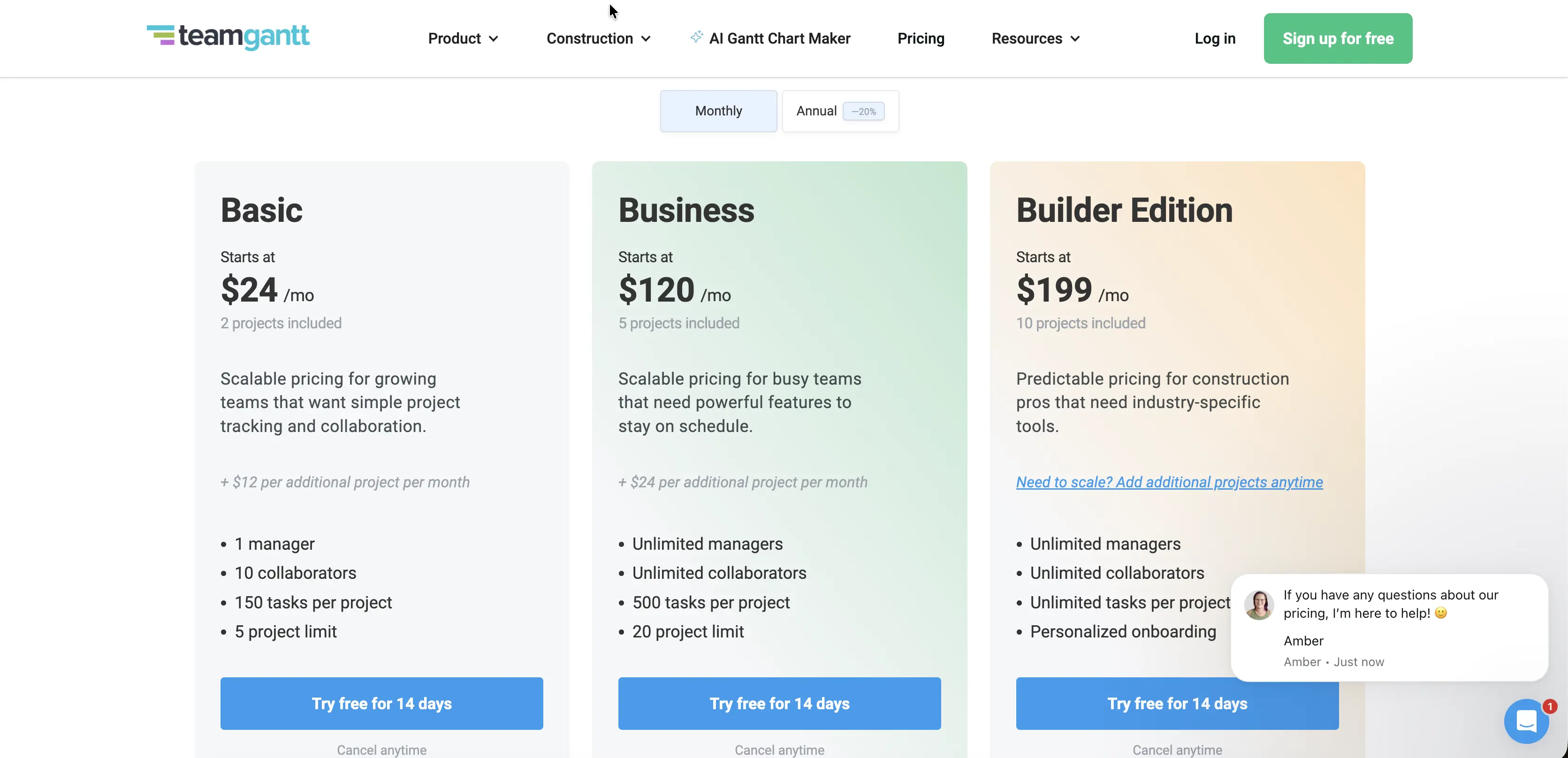
Price: Basic starts at $24 a month for 2 projects, billed annually. Free plan: yes, 1 personal project, 40 tasks. Best for: teams whose work is actually a timeline, not a board with due dates bolted on.
TeamGantt bills per project instead of per seat, an unusual model next to everything else here, worth checking if your real complaint is timeline planning rather than card layout. The TeamGantt pricing page confirms Basic covers 10 collaborators and 150 tasks per project, while Business at $120 a month covers 5 projects with unlimited collaborators.
The 12 Trello Alternatives side by side
Tool | Cheapest paid plan (annual) | Free plan limit | Best for |
|---|---|---|---|
ClickUp | $7/user/mo | Unlimited members, 60MB storage | A real free plan with no member cap |
Linear | $10/user/mo | 2 teams, 250 issues | Fast software issue tracking |
Wrike | $10/user/mo | Essential tasks only | Gantt charts and approval chains |
monday.com | $9/seat/mo (3 seat min) | 2 seats | Visual, non technical friendly boards |
Asana | $10.99/user/mo | 2 users | Timelines and rules Trello lacks |
Notion | $10/member/mo | Single user unlimited | Boards and docs in one workspace |
MeisterTask | ~$7/user/mo | 3 projects | Simple boards with light automation |
Jira | $7.91/user/mo | Under 10 users | Deep workflow and permission control |
Smartsheet | ~$9/user/mo | Trial only | Spreadsheet style rollup reporting |
Basecamp | $299/mo flat (unlimited users) | 1 project, 20 users | One flat bill instead of per seat pricing |
Airtable | $20/user/mo | Unlimited collaborators | A board backed by a real database |
TeamGantt | ~$24/mo (2 projects) | 1 project, 40 tasks | Timeline heavy, not board heavy work |
Where Trello still wins
None of the twelve fully replace what makes Trello Trello. Its Power Up marketplace has years of third party integrations behind it, its Butler automation engine is capable for a free tool, and almost everyone on a team already knows how to use it, so switching carries a retraining cost that doesn't show up on a pricing page. For a team of two or three under the 10 collaborator cap, that math often still favors staying put.
How to pick a Trello alternative
If you are... | Pick | Why |
|---|---|---|
Blocked by Trello's 10 collaborator cap | ClickUp | Free plan has no member limit at all |
Choosing between Trello and Asana directly | Asana | Timelines and automated rules Trello can't do natively |
Wanting a free plan built for project management, not just a to do list | ClickUp or Notion | Both include real project structure on their free tier |
Managing work that's actually a schedule | TeamGantt or Wrike | Built around Gantt views, not a board with dates added on |
Already living inside the Atlassian ecosystem | Jira | Two way sync and shared admin with Confluence |
Running client work as an agency | Basecamp | One flat monthly bill regardless of headcount |
FAQs: Trello Alternatives
What are the best Trello alternatives?
ClickUp for a free plan with no member cap, Asana for timelines and automation, and TeamGantt if the work you manage is actually a schedule.
Is there a free Trello alternative?
Yes. ClickUp's free plan has no cap on members at all, directly answering the problem Trello's 10 collaborator limit creates. Notion and Airtable also offer usable free tiers.
What is the best free Trello alternative in 2026?
ClickUp, since its Free Forever plan removes the member cap entirely instead of just raising the number. The catch is a tight 60MB storage limit on that same tier.
Is there an open source alternative to Trello?
None of the twelve above are open source. If self hosting matters to you, look at dedicated self hosted boards like Wekan or Planka instead.
What is the cheapest Trello alternative?
ClickUp's Unlimited tier at $7 a user a month is the cheapest paid plan here that removes real limits, with a free tier that costs nothing and caps nothing but storage.
How does Zenkit compare to Trello alternatives like these?
Zenkit is another lightweight kanban tool often mentioned alongside Trello in searches, but it wasn't part of this test. Check its current pricing directly if it's on your shortlist.
What I'd actually install
For a team still under Trello's 10 collaborator cap and happy with a plain board, there's no urgent reason to move. Past that number, ClickUp is where I'd start, since its free plan removes the exact wall that sent me looking in the first place.
If the real complaint is timelines rather than cards, TeamGantt or Wrike solve a problem Trello was never built to solve. None of the twelve copy Trello card for card. Each one replaces the specific piece your team has actually outgrown.