HubSpot CRM is the free pick for a solo rep who needs a clean pipeline. Pipedrive is the cheapest paid option built around the pipeline itself, starting at 14 dollars a seat a month. Close is the one built for teams who live on the phone, with a dialer and AI calling baked into every plan. The rest of this guide covers ten more, with the real price of each one checked today, not the number a vendor quoted six months ago.
A Quora thread titled "What are good alternatives to Zoho CRM?" has pulled in ten separate answers, and almost none of them agree, because almost none of the people answering run the same kind of sales team. That is the real problem with most Zoho roundups. They hand you a list without asking what you actually do all day. I set up CRMs for small consulting clients for a living, so I priced these thirteen the way I would for a client call this week: official pricing pages, checked today, no promo rates quietly dropped into the sticker price.
Where Zoho starts to pinch
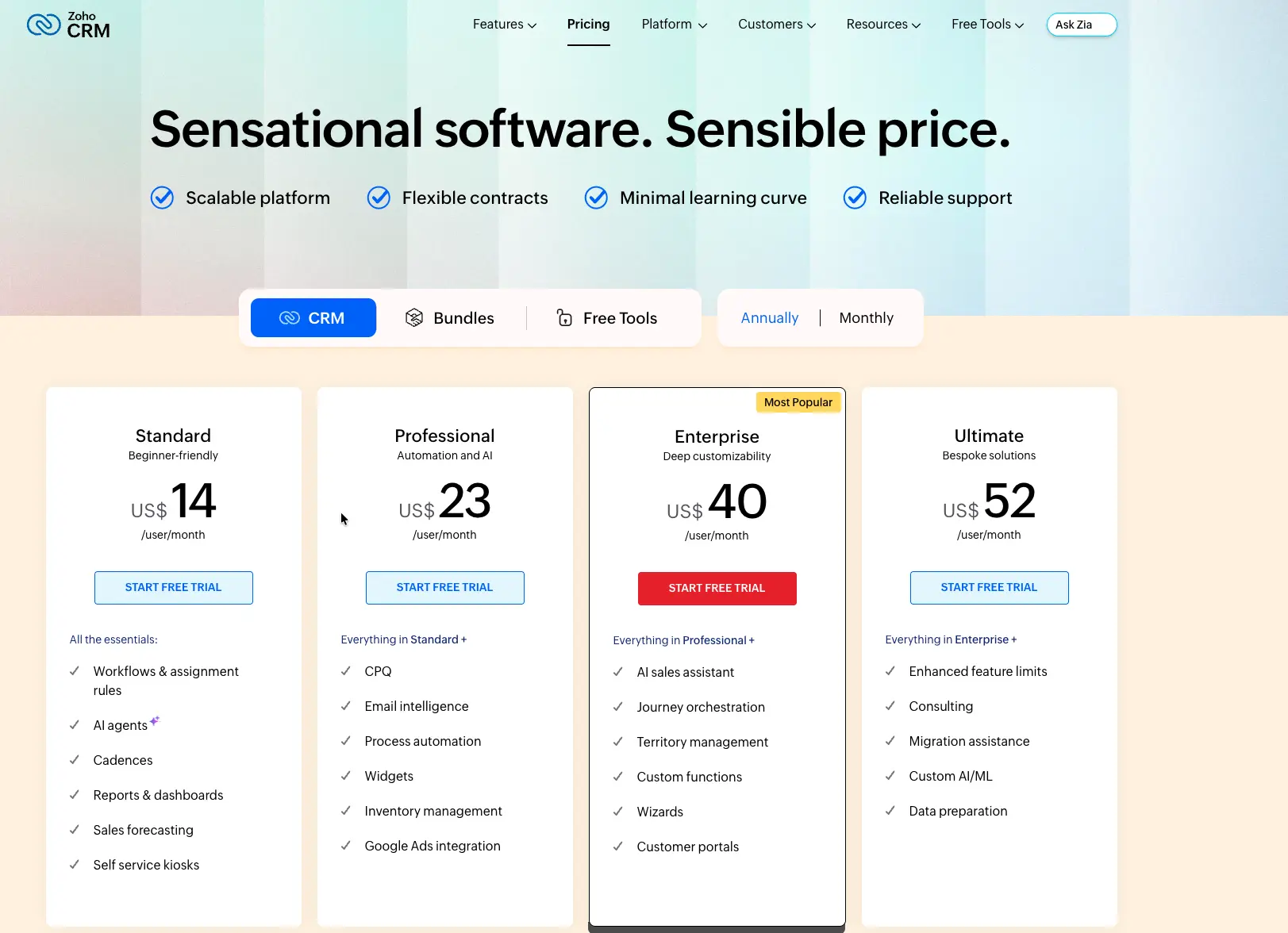
One G2 reviewer in marketing and advertising put the appeal, calling it "a fraction of the cost of competitors like HubSpot or Salesforce." That price gap is real, but it comes with limits most comparisons skip.
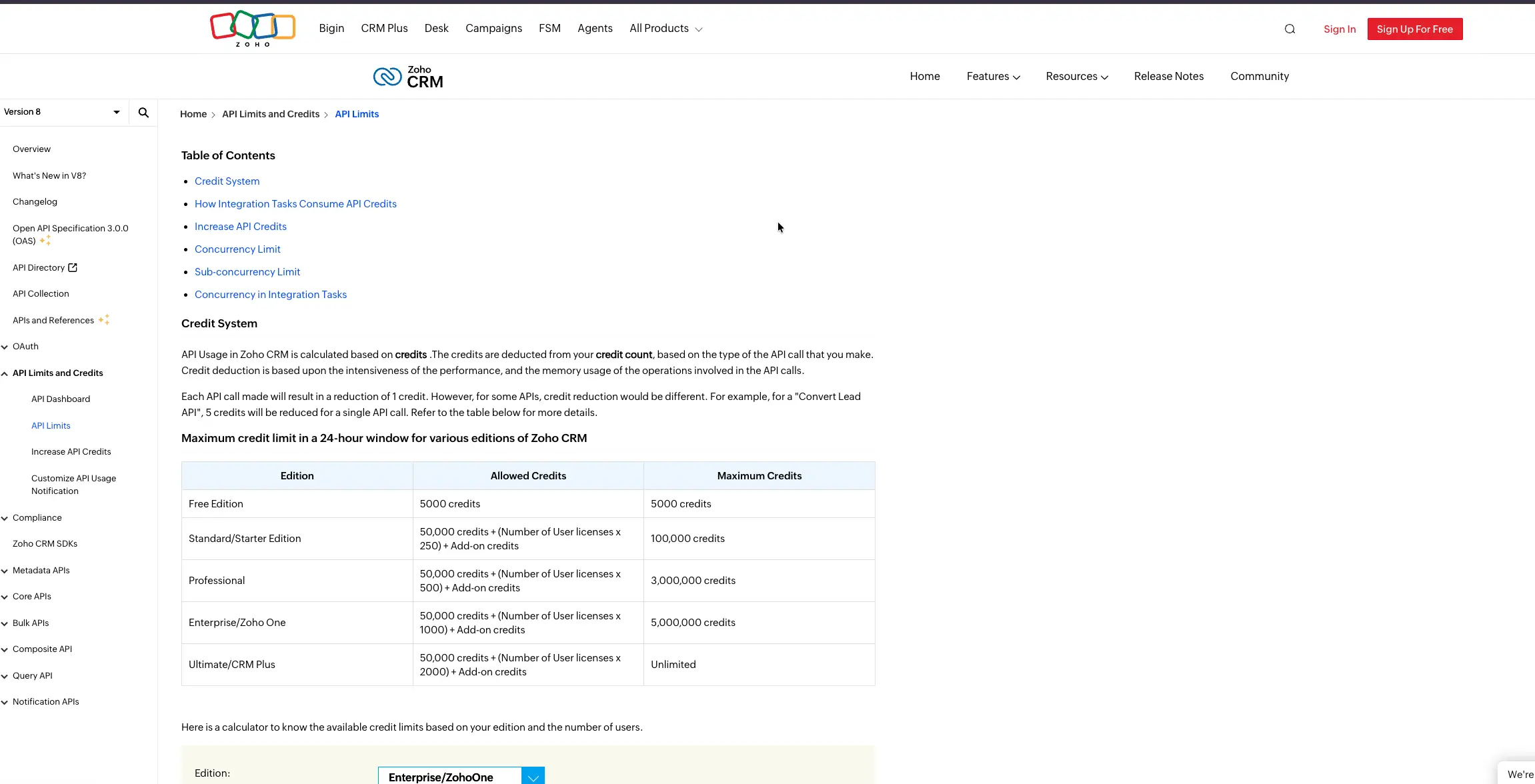
Here is the number nobody puts in a Zoho comparison. The free plan caps API credits at 5,000 a day, flat, whether you have one user or the full three. Standard scales per seat, 50,000 plus 250 credits per license, but even that scaling stops at a hard ceiling of 100,000 credits in any 24 hour window. Connect two or three outside tools to a free or Standard account and that ceiling arrives faster than most people expect. Zoho also markets itself everywhere as an AI CRM, but the predictive pieces, field prediction and churn prediction, do not show up until Professional and Enterprise. Standard users get workflow automation, not the AI that is on the homepage.
The Zoho CRM Alternatives Ranked
1. HubSpot CRM
Price: Free forever for unlimited users. Sales Hub Starter runs 20 dollars a seat a month, Professional is 100, Enterprise is 150, all billed annually.
HubSpot CRM is a customer relationship management platform that gives every user contact records, deal pipelines, and email tracking at no cost, with paid Sales Hub tiers layered on top for automation and reporting. The free tier has no user cap, which is the one thing Zoho's free plan cannot match at three users. Automation, sequences, and forecasting all sit behind Starter or Professional, so the free plan is a real CRM but a light one. It also comes up more than any other name in that Quora thread on Zoho alternatives, usually from people who outgrew Zoho's three user free cap before they outgrew the need for a free plan at all. For a deeper look at where HubSpot's own paid tiers get expensive, see saasswitcher's HubSpot alternatives guide.
2. Freshsales
Price: Free for three users. Growth is 9 dollars a user a month, Pro is 39, Enterprise is 59, billed annually.
Freshsales, part of Freshworks, is a sales focused CRM with built in phone and email tracking on every paid tier. Growth covers the basics but skips AI lead scoring and sales sequences, both of which need Pro. Calling is included in the subscription, but minutes are billed separately, so budget a little past the sticker price if your team is on the phone often.
3. Capsule CRM
Price: Free for two users and 250 contacts. Starter is 18 dollars a user a month, Growth is 36, Advanced is 54, billed annually.
Capsule CRM is a lightweight contact and pipeline manager built for small teams that do not want a steep learning curve. The free plan holds up for a two person shop testing the waters, and Starter at 18 dollars undercuts almost everything else on this list with real automation attached. Advanced adds AI assisted data entry, useful once a team grows past a handful of reps.
4. Bitrix24
Price: Free for an unlimited number of users. Basic is 49 dollars a month per organization, Standard is 99, Professional is 199, billed annually.
Bitrix24 bundles CRM with project management, a phone system, and internal chat, and charges per organization instead of per seat. That flat structure means a 50 person team on Standard pays roughly 2 dollars a head a month, a real advantage over every per seat tool on this list once headcount climbs. The cost of that flat price is a denser interface that takes longer to learn than Capsule or Pipedrive.
5. Pipedrive
Price: Lite is 14 dollars a user a month, Growth is 39, Premium is 49, Ultimate is 79, billed annually.
Pipedrive is a visual, pipeline first CRM built around moving deals through stages rather than managing broader customer data. Lite covers deal tracking only. Automation and email sync do not arrive until Growth, so most teams end up budgeting from 39 dollars, not the 14 dollars the homepage leads with.
6. Nutshell
Price: Foundation is 13 dollars a user a month, Growth is 25, Pro is 42, billed annually.
Nutshell is a sales and light marketing CRM aimed at small teams that want one bill instead of separate sales and email tools. Every tier includes unlimited contacts and free onboarding, a rarity among tools that otherwise charge for setup help. Pro adds API access, which Nutshell gates higher than most competitors on this list.
7. monday CRM
Price: No free plan, three seat minimum. Basic is 12 dollars a seat a month, Standard is 17, Pro is 28, Enterprise is custom, billed annually.
monday CRM runs on monday.com's board based interface, which makes it a natural fit for a team that already tracks projects there. Automation does not appear until Standard, so a Basic subscription is closer to a contact list with a nice layout than a working sales tool. The 3 seat minimum means a true solo user still pays for three licenses.
8. Insightly
Price: No free plan. Plans start at 29 dollars a user a month.
Insightly pairs CRM with project management, aimed at teams that hand off a closed deal straight into delivery work. That project layer is the reason to pick Insightly over a pure sales tool, but it also means paying for features a sales only team will never touch. Useful automation lives on the higher tiers, not the entry plan.
9. Copper
Price: Starter is 9 dollars a user a month, Professional is 59, Business is 99, billed annually.
Copper is built to live inside Gmail, pulling contacts and email history straight from a Google Workspace inbox with almost no manual entry. Starter skips workflow automation and reporting entirely, both of which require Professional. For a Google Workspace shop that hates re typing contact details, the jump to Professional tends to pay for itself in saved admin time.
10. Salesflare
Price: Growth is 29 dollars a user a month, scaling to 99 on the top tier, billed annually.
Salesflare markets itself as a CRM that fills itself in, pulling contact and company data from a connected inbox and calendar automatically. There is no user cap on contacts, pipelines, or templates at any tier, which is unusual among the budget options here. The 30 day trial needs no card, and onboarding help is free, two things Keap and HubSpot charge for.
11. Close
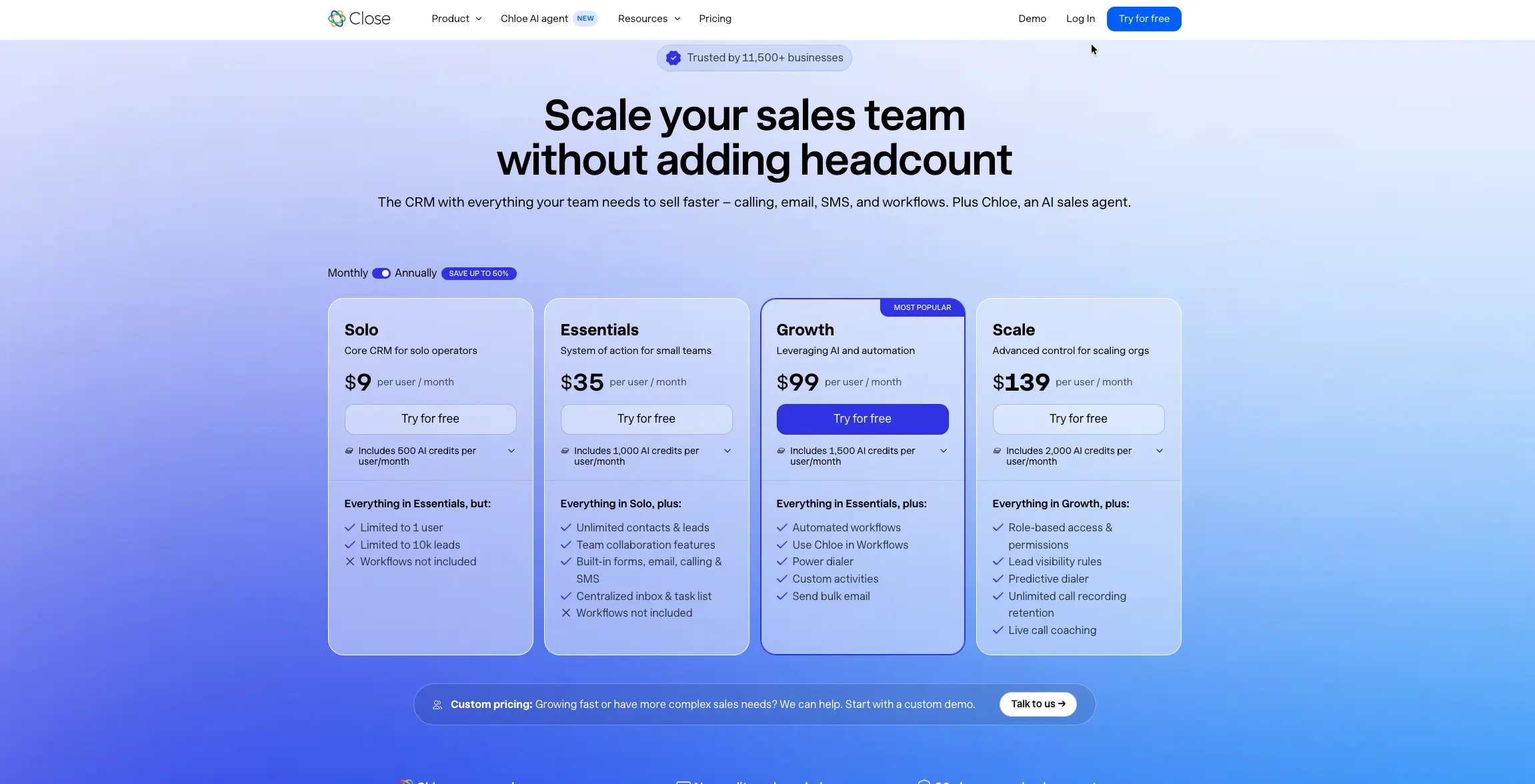
Price: Solo is 9 dollars a user a month, Essentials is 35, Growth is 99, Scale is 139, billed annually.
Close is a CRM built around outbound calling, with a native dialer, email, and SMS in one inbox. Every plan now includes Chloe, an AI agent that can call leads and log the conversation automatically, a feature Close's pricing page confirms was only added this year. The real cost climbs with usage though, since call minutes and phone numbers bill separately from the seat price.
12. Keap
Price: A single plan at 249 dollars a month billed annually, covering two users and 1,500 contacts. Extra users cost 39 dollars a month each.
Keap, formerly Infusionsoft, combines CRM with email marketing, invoicing, and payments in one small business platform. It dropped its old Pro, Max, and Ultimate tiers in 2026 in favor of one plan that scales by contact count and seats instead. A 500 dollar setup fee is mandatory for new accounts, on top of the subscription, which changes the real first year cost more than the sticker price suggests.
13. Salesforce Sales Cloud
Price: A free Suite covers two users. Starter Suite is 25 dollars a user a month, Pro Suite is 100, Enterprise is 175, Unlimited is 350, billed annually.
Salesforce Sales Cloud is the enterprise standard for sales teams that need deep customization, territory management, and a marketplace of thousands of add ons. Most mid market teams land on Enterprise at 175 dollars, still under half of Salesforce's own AI focused Agentforce 1 tier at 550. The jump from Starter to Pro Suite is a four times price increase for automation most small teams assume is already included. See our own Salesforce alternatives guide for a deeper breakdown of the Agentforce AI tiers.
Zoho CRM Alternatives Usage
HubSpot CRM: free forever, unlimited users, paid tiers from 20 dollars a seat
Freshsales: free for three users, paid tiers from 9 dollars a user
Capsule CRM: free for two users, paid tiers from 18 dollars a user
Bitrix24: free for unlimited users, paid tiers from 49 dollars per organization
Pipedrive: no free plan, paid tiers from 14 dollars a user
Nutshell: no free plan, paid tiers from 13 dollars a user
monday CRM: no free plan, three seat minimum, paid tiers from 12 dollars a seat
Insightly: no free plan, paid tiers from 29 dollars a user
Copper: no free plan, paid tiers from 9 dollars a user
Salesflare: no free plan, paid tiers from 29 dollars a user
Close: no free plan, paid tiers from 9 dollars a user
Keap: no free plan, single plan from 249 dollars a month
Salesforce Sales Cloud: free Suite for two users, paid tiers from 25 dollars a user
Which Zoho CRM Alternatives Actually Fit You
If you are a solo founder or one person team: start with HubSpot CRM or Capsule's free plan before paying for anything. Neither charges you until automation becomes a real need.
If your team lives on the phone: Close is built for that specific workflow, and Freshsales and Copper both include calling as an add on rather than the core product.
If headcount is the main cost driver: Bitrix24's flat organization pricing beats every per seat tool here once a team passes roughly 15 people.
If you need deep customization and can pay for it: Salesforce Enterprise at 175 dollars a user is still the ceiling most of this list is competing against.
If you want the wider CRM landscape before narrowing to Zoho's competitors: our best CRM software for small business roundup prices ten tools on annual versus monthly billing, several of which overlap with this list.
FAQ: Zoho CRM Alternatives
What is the best Zoho CRM alternative for a small business?
For a small business on a tight budget, HubSpot CRM or Capsule CRM cover the basics for free, and Pipedrive at 14 dollars a user is the cheapest paid option with real pipeline automation attached.
What are the main Zoho CRM competitors?
The most searched Zoho CRM competitors are HubSpot, Pipedrive, and Salesforce, with Freshsales and monday CRM also common picks for teams that want an easier learning curve.
Zoho CRM vs HubSpot, which one should I pick?
Zoho charges from 14 dollars a user with a three user free cap, while HubSpot's core CRM is free for unlimited users but gates automation behind a 20 dollar Starter seat. Pick Zoho if you want AI features cheaper per seat, and HubSpot if you have more than three people and no automation budget yet.
Is there a free alternative to Zoho CRM?
Yes. HubSpot CRM and Bitrix24 both offer free plans with no user cap, while Capsule and Freshsales cap their free plans at two and three users respectively, matching Zoho's own free tier limit.
My picks for Zoho CRM Alternatives
HubSpot CRM if you want free with no user ceiling. Pipedrive if you want the cheapest real automation. Close if your team's day is built around the phone. All thirteen are worth a trial before a contract, since the sticker price on every single one of these tools is the number that changes first once you actually start using it.