If you want the cheapest way in, start with Freedcamp at $1.49 per user per month. If you want Basecamp's own flat price idea done differently, Nifty sells a true flat rate plan. If you're outgrowing simple boards and need real reporting, ClickUp is the strongest all around pick.
I run one small business alone, with a rotating handful of freelancers and two ongoing client accounts, so Basecamp's client visibility settings and its jump from per user pricing to a flat $299 a month plan both hit close to home. I spent $85 across four weeks running a two person setup, me plus one freelancer, through the cheapest paid tier of six Basecamp alternatives: ClickUp, Teamwork.com, Nifty, Freedcamp, GoodDay, and Wrike. I paid every invoice myself, the same way I pay for every tool I write about here.
Pricing and features below were verified on 13 August 2026 directly from each tool's official pricing page, not from a reseller or a review aggregator.
Where Basecamp stops making sense
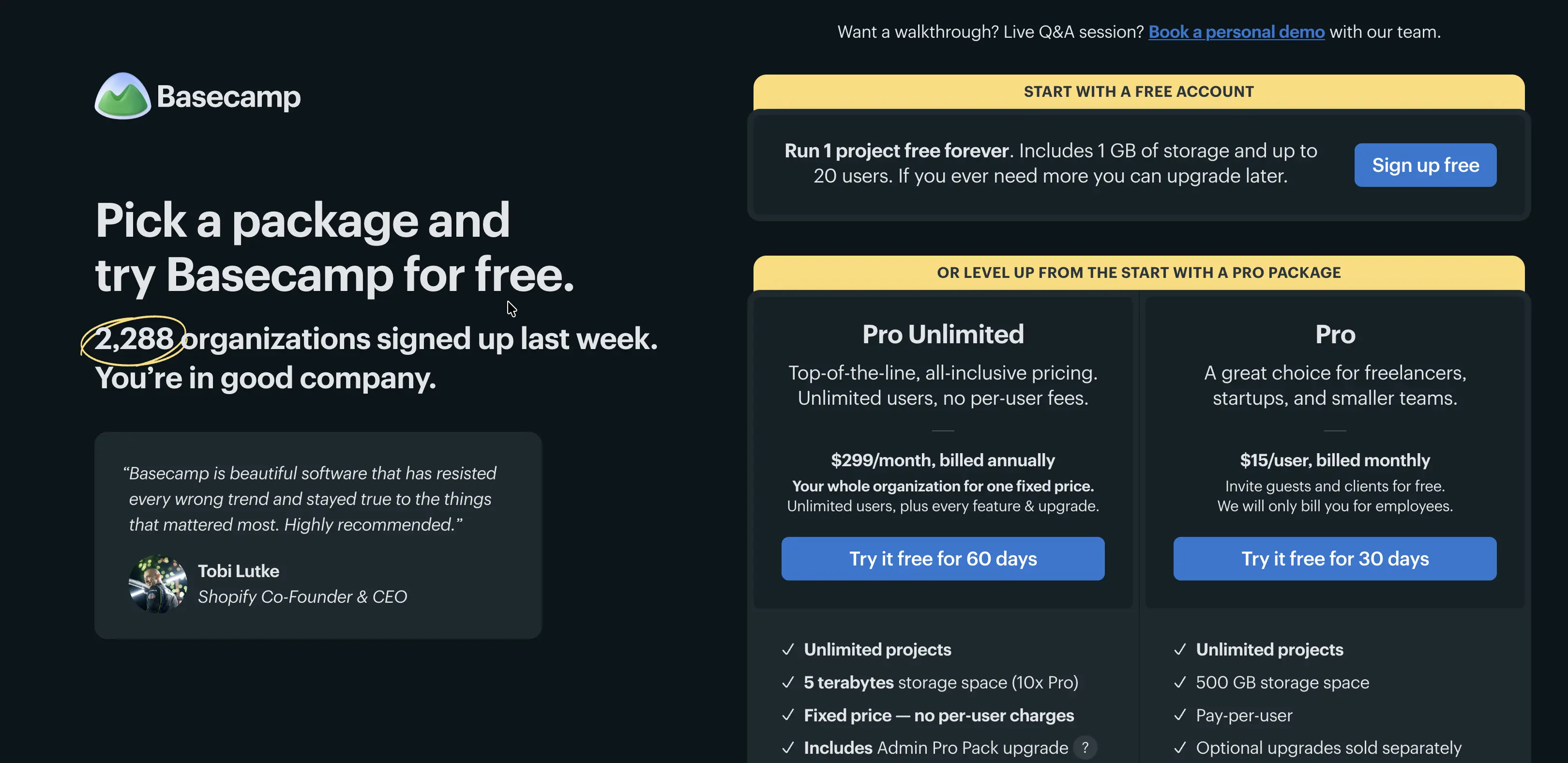
Basecamp's own pricing page states the philosophy plainly: "Your whole organization for one fixed price. Unlimited users, plus every feature & upgrade." That's a real, and fairly rare, promise. The catch is what it takes to get there. The Pro plan bills $15 per user per month with unlimited projects and 500 GB of storage. Pro Unlimited, the flat plan, costs $299 a month billed annually for unlimited users and 5 TB of storage.
Divide $299 by $15, and you land on 20, which is the actual number of people you need on the team before the flat plan beats paying per seat. Below 20 users, you're paying Basecamp's per seat rate the whole time, exactly like every alternative on this list. Below that 20 person line you're back to per seat billing like everyone else, so the comparison that matters is what a seat actually costs elsewhere. I priced the best project management software in 2026 on real per user rates and free plan caps.
Basecamp also pushes time tracking and deeper admin controls into $50 a month add ons instead of including them, and it still has no Gantt style timeline, dependencies, or built in reporting dashboard.
One Capterra reviewer, a business analyst, put it plainly while still praising the approval workflow and integrations: the tool felt overpriced for what it actually does. Basecamp's Capterra reviews page holds a 4.3 star average across more than 14,000 ratings, so this is a recurring theme inside otherwise positive reviews, not an outlier.
If you already use Trello or Asana day to day and want the full seat pricing breakdown for those tools specifically, I covered Trello's real seat pricing here and Asana's seat pricing here.
The 10 best Basecamp Alternatives, Based on Use Cases
I grouped these by who actually needs them, not by a single overall ranking, since the right pick depends more on team size and how you bill clients than on any one feature list.
Best for solo founders and freelancers on a tight budget
Freedcamp
Freedcamp is a project management tool that runs on flat, unlimited seat pricing even on its free plan. The free tier includes unlimited projects, tasks, storage, and users, already wider than Basecamp's one project free cap. The Pro tier costs $1.49 a user a month billed annually, the cheapest paid seat on this list, and adds file editing, tags, and deeper permission controls. It's the plan I'd point a solo operator to first.
GoodDay
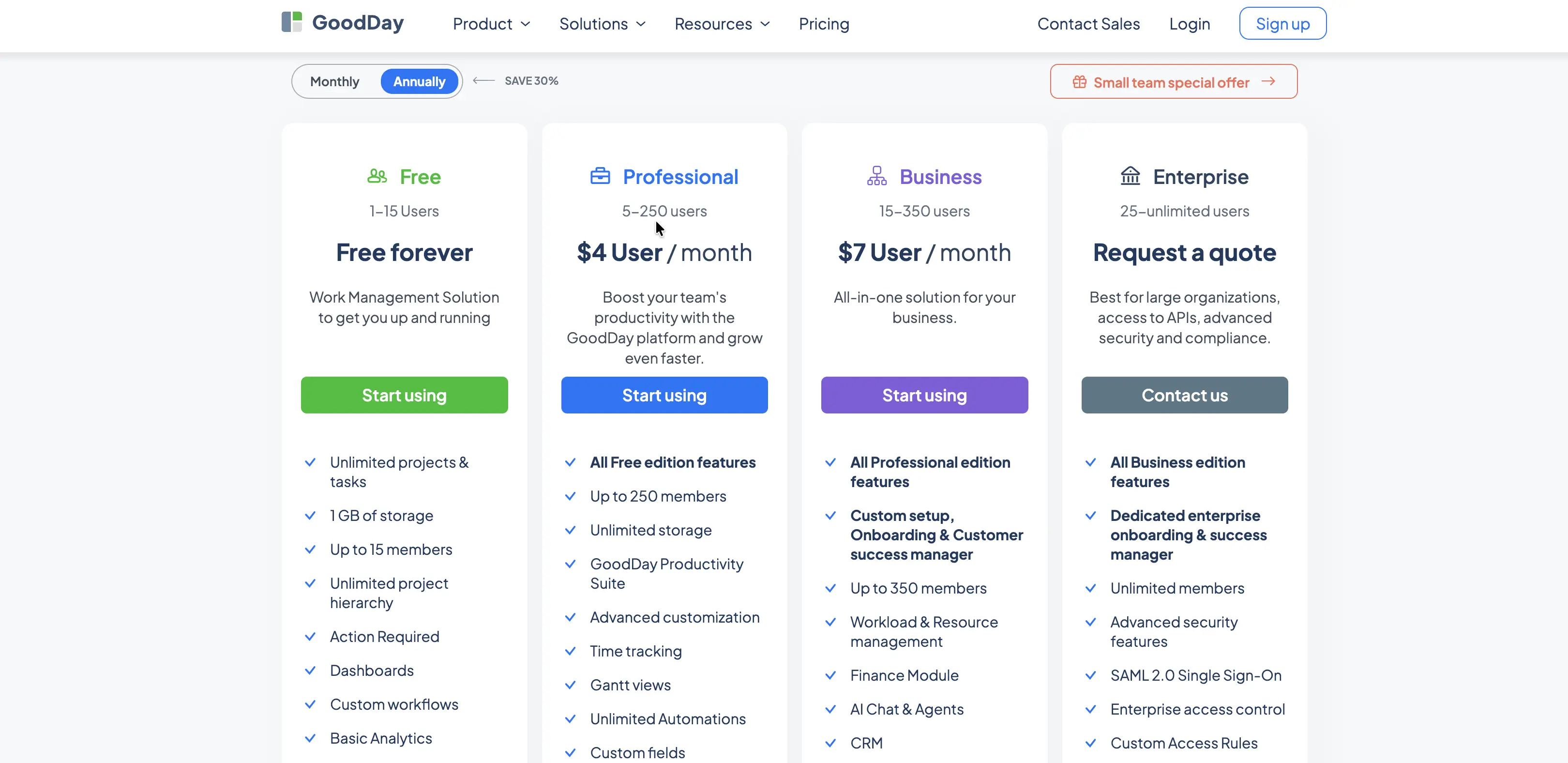
GoodDay is a project and task management tool built around dashboards and custom workflows rather than message boards. Its Professional plan runs $4 a user a month billed annually, and the free plan covers up to 15 members with unlimited projects and 1 GB of storage, more headroom than Basecamp gives away for free.
Best for agencies managing client work
Teamwork.com
Teamwork.com is a project management tool built around client facing agency work, the same audience Basecamp's client visibility toggle targets. The Basics plan costs $9.99 a user a month billed annually and includes Gantt style table views, time logging, and client based project organization, features Basecamp omits or charges extra for. The free plan tops out at 5 users and 5 projects, small but usable for testing one client engagement.
Podio
Podia, sold today through Progress Software, is a customizable work platform where you build your own apps for tracking client deliverables. The Plus plan runs $11.20 a user a month billed annually with unlimited items and visual reporting. It's less polished than Basecamp out of the box, but the customization ceiling is higher once a client's workflow gets specific.
Best for remote teams that want basecamp alternatives with flat pricing
If Basecamp's fixed price idea is the part you actually like,
Nifty copies that model directly instead of billing per seat. Its flat rate Pro plan runs about $63 a month billed annually for up to 20 members, working out to roughly $3 a person if your team is close to that cap, well under Basecamp's $299 flat tier for a team that size. Nifty also bundles milestones, docs, and team chat into every tier, so you're not paying $50 a month extra for basics the way you would on Basecamp's admin add on.
Best for teams scaling past Basecamp's simple boards
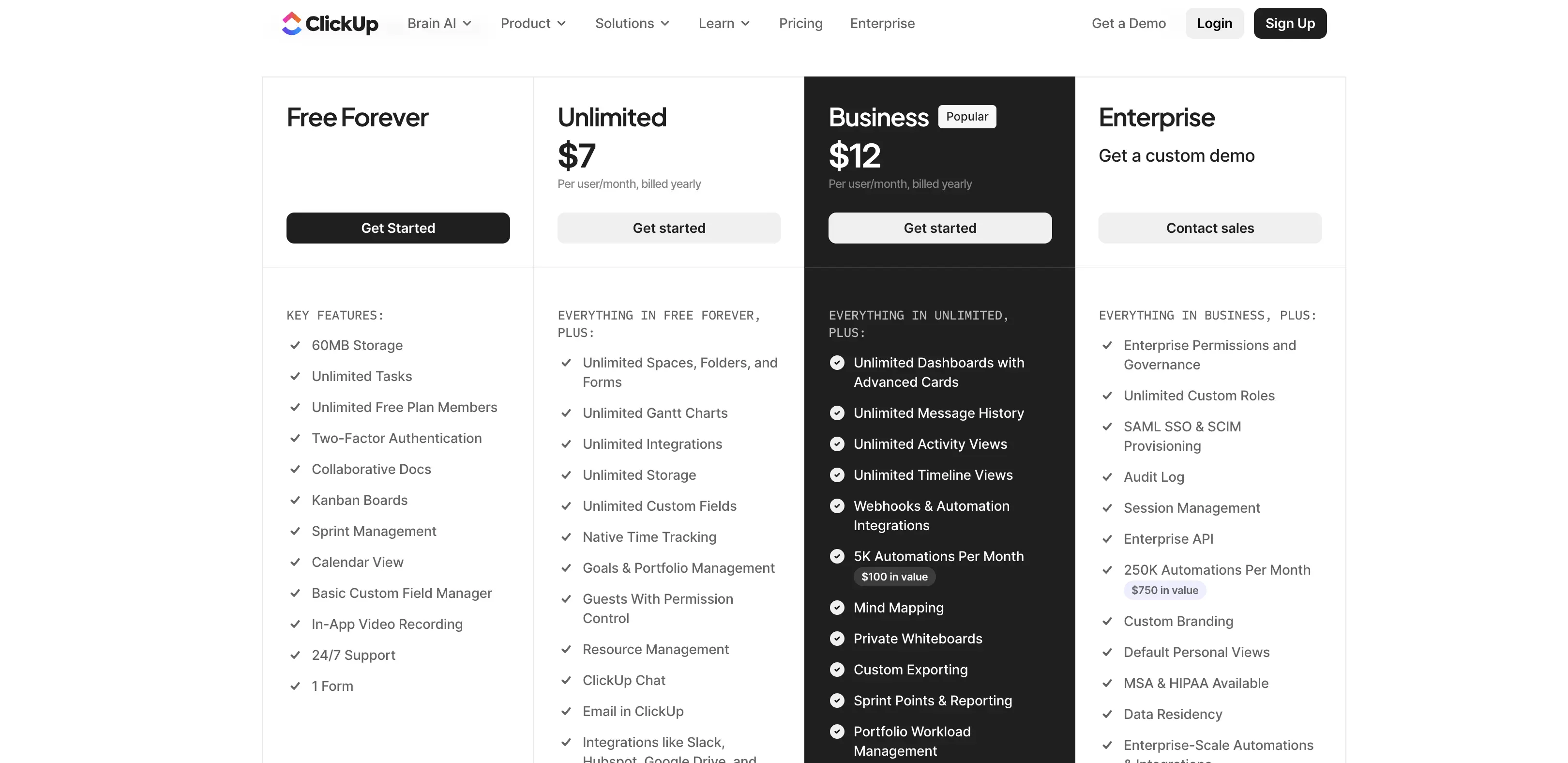
ClickUp is a highly configurable work management platform that adds native time tracking, unlimited custom fields, and unlimited integrations starting on its Unlimited plan at $7 a user a month billed annually, cheaper than Basecamp's $15 seat and with more depth than Basecamp offers on any plan. It's also one of the picks in my breakdown of Jira alternatives, for teams choosing between the two.
The free tier allows unlimited members but caps storage at 60 MB, better for testing than daily use.
monday.com
monday.com is a visual work operating system with color coded boards, automations, and AI credits built into every paid plan. The Basic tier starts at $9 a seat a month billed annually, though monday displays pricing assuming a 10 seat minimum, worth knowing if your team is smaller. It's a strong pick once a team needs dashboards and cross department visibility Basecamp's message boards were never built to show.
Wrike
Wrike is a work management platform for teams that have outgrown simple task lists and need real Gantt charts and resource planning. The Team plan costs $10 a user a month, supports 2 to 15 users, and includes interactive Gantt charts and shareable dashboards, both absent from Basecamp at any tier.
Best for teams already comparing Basecamp vs Asana or Basecamp vs Trello
Trello
Trello is a board based task tool built around Kanban cards rather than Basecamp's message and to do list format. The Standard plan runs $5 a user a month billed annually, the cheapest named brand option here, and the free plan now allows unlimited cards with up to 10 boards per workspace. If your team already thinks in cards, the switch from Basecamp feels natural.
Asana
Asana is a task and project management tool with strong automation rules and portfolio level reporting. The Starter plan costs $10.99 a user a month billed annually with no seat limits past the 2 person free tier. In a straight basecamp vs asana comparison, Asana wins on reporting depth and automation, while Basecamp still wins on simplicity for teams that find Asana overwhelming.
Where basecamp still wins
Not every team should switch. If your team is small, mostly async, and tired of extra software features, Basecamp's message board and to do list format skips the decision fatigue every tool above adds back with more views, more fields, and more settings.
Basecamp also wins once headcount actually clears that 20 user break even point, since no per seat competitor here beats $299 a month for a whole company that size. The question isn't whether basecamp alternatives exist, it's whether your team's size and workflow actually need what they add.
Basecamp Alternatives Comparison Table
Tool | Cheapest paid plan | Free plan cap | Flat rate option | Best for |
|---|---|---|---|---|
Freedcamp | $1.49/user/mo | Unlimited users | No | Tight budgets |
GoodDay | $4/user/mo | 15 members | No | Budget conscious solo teams |
Teamwork.com | $9.99/user/mo | 5 users | No | Client facing agencies |
Podio | $11.20/user/mo | 5 users | No | Custom app workflows |
Nifty | ~$63/mo (up to 20 members) | 2 active projects | Yes | Remote teams wanting flat pricing |
ClickUp | $7/user/mo | Unlimited members | No | Scaling past simple boards |
monday.com | $9/seat/mo | 2 seats | No | Cross department visibility |
Wrike | $10/user/mo | Unlimited (2 to 15 users) | No | Gantt charts and resourcing |
Trello | $5/user/mo | Unlimited cards | No | Card based, Kanban first teams |
Asana | $10.99/user/mo | 2 users | No | Automation and reporting depth |
How to pick a basecamp alternative
If you're an agency billing multiple clients and need them to see progress without seeing your internal mess, then Teamwork.com or Podio fit better than a generic task board, since client separation is built into the plan structure.
If you're a fully remote team that liked paying one flat number for everyone, then Nifty is the closest match to what Basecamp sold you, at a fraction of the price until headcount gets large.
If you're scaling past 10 or 15 people and keep hitting Basecamp's lack of dependencies, Gantt views, or real reporting, then ClickUp or Wrike are the natural next step, since both were built for that growth point.
If you're still under about 20 people and only spend a few hours a week on project software at all, staying on Basecamp's per seat Pro plan may cost less than switching, at least until the math above flips in the flat plan's favor.
FAQs: Basecamp alternatives
What are good Basecamp alternatives?
ClickUp, Freedcamp, Teamwork.com, Nifty, and Trello all cover different needs, from ClickUp's depth to Freedcamp's near free pricing. The right one depends on team size and whether you bill clients directly through the tool.
Is there a free alternative to Basecamp?
Yes. Freedcamp's free plan allows unlimited projects, tasks, and users with no seat cap, and GoodDay's free plan covers up to 15 members, both wider than Basecamp's single project free tier.
Is there an open source alternative to Basecamp?
Yes, OpenProject is a self hosted, open source project management tool with its own free community edition. It takes more setup than any tool on this list but avoids monthly per seat billing entirely.
Which Basecamp alternative has built in time tracking?
ClickUp includes native time tracking starting on its $7 a user Unlimited plan, and Teamwork.com logs time on its $9.99 Basics plan. Basecamp only offers time tracking as a $50 a month add on, regardless of which base plan you're on.
Is Airtable a good Basecamp alternative?
Airtable works better as a database and content tracker than as a task and message hub, so it fits teams that already think in spreadsheets more than teams replacing Basecamp's daily to do and discussion flow directly.
My picks for Basecamp Alternatives
If you only read one section, read this.
Freedcamp is the cheapest real switch, at $1.49 a user a month with no seat cap on the free plan.
Nifty is the closest thing to Basecamp's own flat price philosophy, just priced for teams well under 20 people.
ClickUp is the pick once your team has actually outgrown what a message board and a to do list can show you.
None of them require you to hit Basecamp's 20 user break even point before the switch starts paying for itself.