If you want to skip nonday CRM's forced 3 seat minimum, HubSpot CRM and Zoho CRM both let a small team start free. If your team lives on the phone, Close bundles a real dialer into every plan. If you just want something simple to open every day, Nutshell and Pipedrive are the easiest to set up in an afternoon.
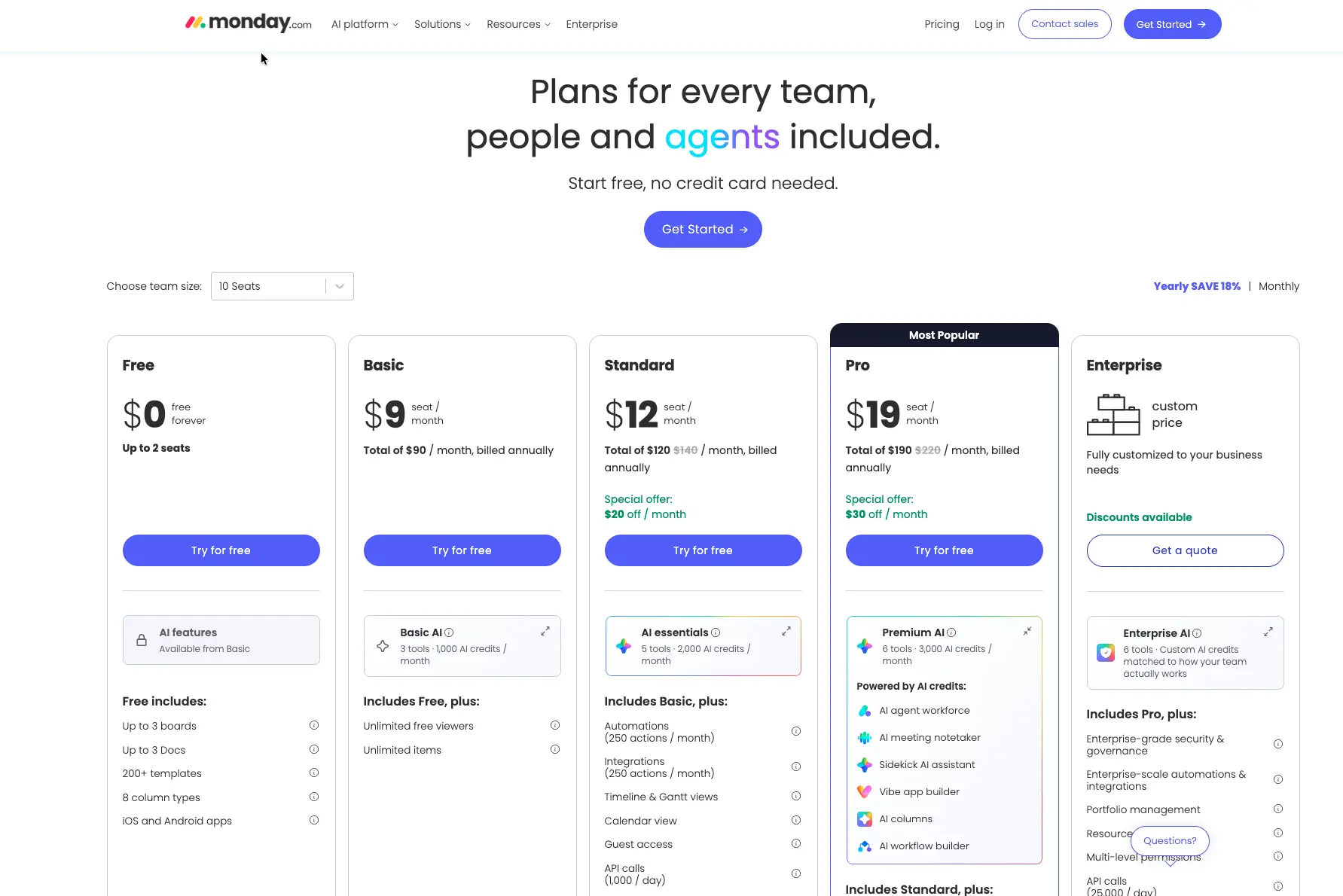
I run marketing for a three person coaching business, and I priced out CRM seats for that exact team size across all ten tools below. The number that surprised me was not a feature gap, it was monday CRM's checkout screen. My team is 3 people, so the Basic plan's 3 seat minimum should fit us perfectly. It does not help the moment I want to test the tool with just myself before rolling it out to the other two, since monday still bills for 3 seats at $12 each, $36 a month billed annually, whether one person logs in or three do.
Capterra's page for monday CRM currently shows 464 verified reviews averaging 4.7 out of 5, and most of the praise centers on the visual boards, not the sales specific tools. Capterra reviewer Simran G, a senior client success manager at a real estate firm, wrote that the platform "honestly changed the way we operate our business," while several other reviewers on the same page flag pricing and seat limits as the sticking point once a team tries to scale past its starting size.
Why look elsewhere: the 3 seat minimum and the sales gap
monday CRM is a customer relationship management platform, software that tracks leads, deals, and customer conversations in one place, built on top of monday.com's work management boards with AI agents layered in for lead scoring, deal prioritization, and call notes. It is easy to look at, and the boards feel familiar right away. The problem shows up the moment you try to run an actual sales process on a small budget.
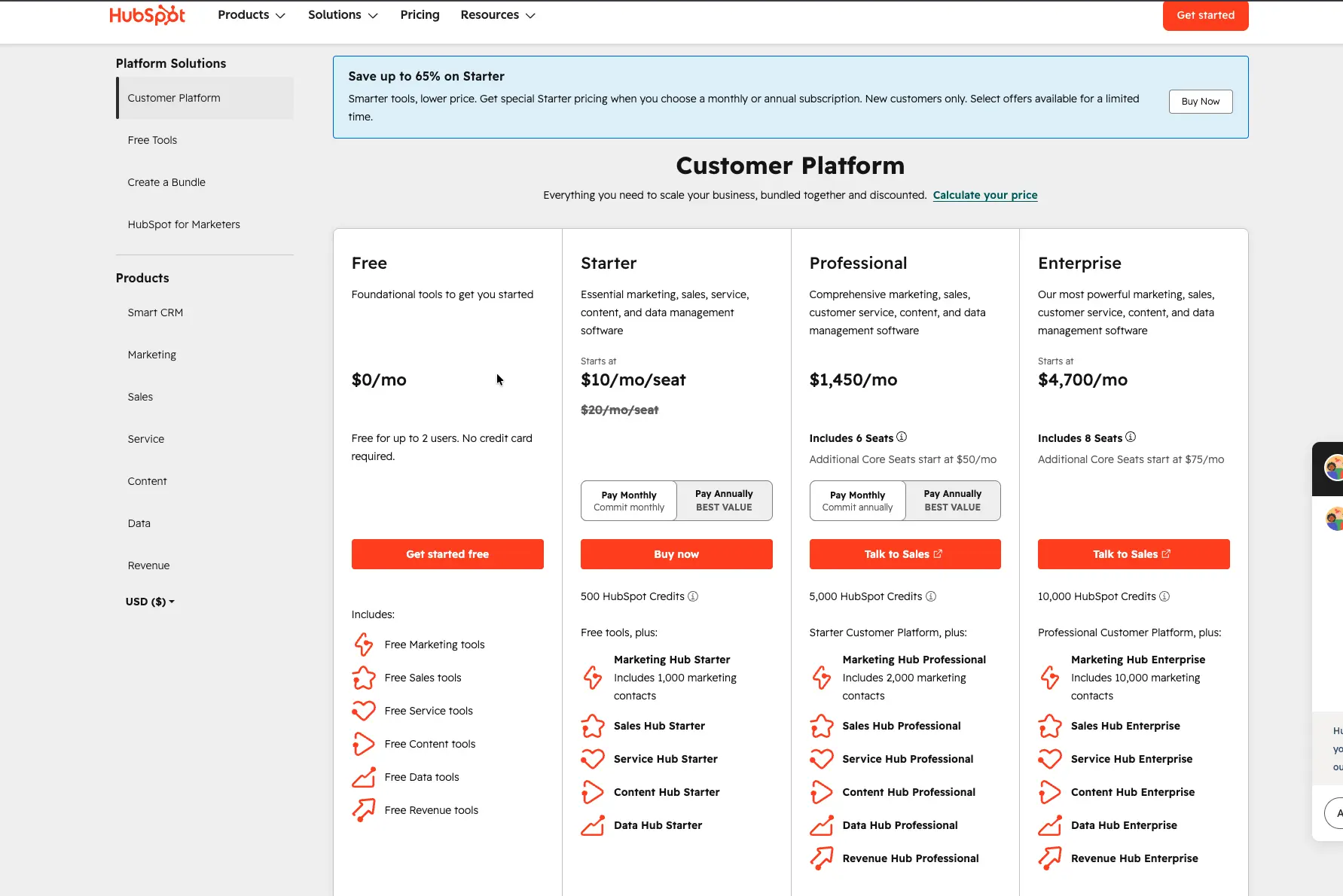
monday's own FAQ confirms plans start from 3 users, and there is no month to month option that lets you pay for less. HubSpot CRM's Starter plan, by contrast, allows exactly one paid seat at $15 a month billed annually. For a founder or a two person team testing the water, that is the difference between a $15 bill and a $36 one for tools you may not fully use yet.
The second gap is depth. monday CRM added sales features on top of a project board, so calling and deal scoring often feel like separate add ons rather than one built in workflow. Tools built CRM first, like Close or Pipedrive, tend to handle those tasks natively instead.
The 10 best monday CRM alternatives in 2026
Tool | Cost for a 3 person team (annual) | Seat minimum | Free plan |
|---|---|---|---|
monday CRM (the subject) | $36/mo | 3 seats forced | No, 14 day trial |
HubSpot CRM | $45/mo, or $0 on Free | None | Yes, forever |
Zoho CRM | $0 (free plan covers 3) | None | Yes, up to 3 users |
Close | $105/mo | None | No, 14 day trial |
Pipedrive | $42/mo | None | No, 14 day trial |
Freshsales | $0 (free plan covers 3) | None | Yes, limited |
Keap | $299/mo flat | None | No, free trial |
Copper | $69/mo | None | No, free trial |
Nutshell | $39/mo | None | No, 14 day trial |
Attio | $0 (free plan covers 3) | None | Yes, 3 seats |
Salesforce Starter | $75/mo | None | No, free trial |
monday CRM alternatives Explained
1. HubSpot CRM
Price: free, or $15/seat/month for Starter, billed annually. Best for: skipping the seat minimum entirely.
HubSpot CRM is a free customer platform that combines contact management, email tracking, and basic pipeline tools, with paid add ons for marketing and service. It is the most complete free alternative to monday CRM because the free tier has no time limit and no forced seat count.
The downside is that HubSpot's branding stays on your emails until you upgrade, and deeper automation lives behind the paid Starter and Professional tiers. Our complete HubSpot alternatives guide covers the Professional tier's onboarding fee if you outgrow Starter later.
2. Zoho CRM
Price: free for up to 3 users, or $14/user/month for Standard, billed annually. Best for: a real free tier at your exact team size.
Zoho CRM covers contact management, workflow automation, and standard reports on its free plan, which caps out at 3 users rather than expiring. For a small team that wants to avoid a bill entirely while testing a real CRM, this is one of the few tools here that never asks for a card.
Zoho's paid tiers add AI insights and process automation once you outgrow the free cap. See our Zoho CRM alternatives roundup for how it stacks up against other budget picks.
3. Close: best for call heavy sales teams
Price: $35/seat/month for Essentials, billed annually. Best for: reps who work the phone all day.
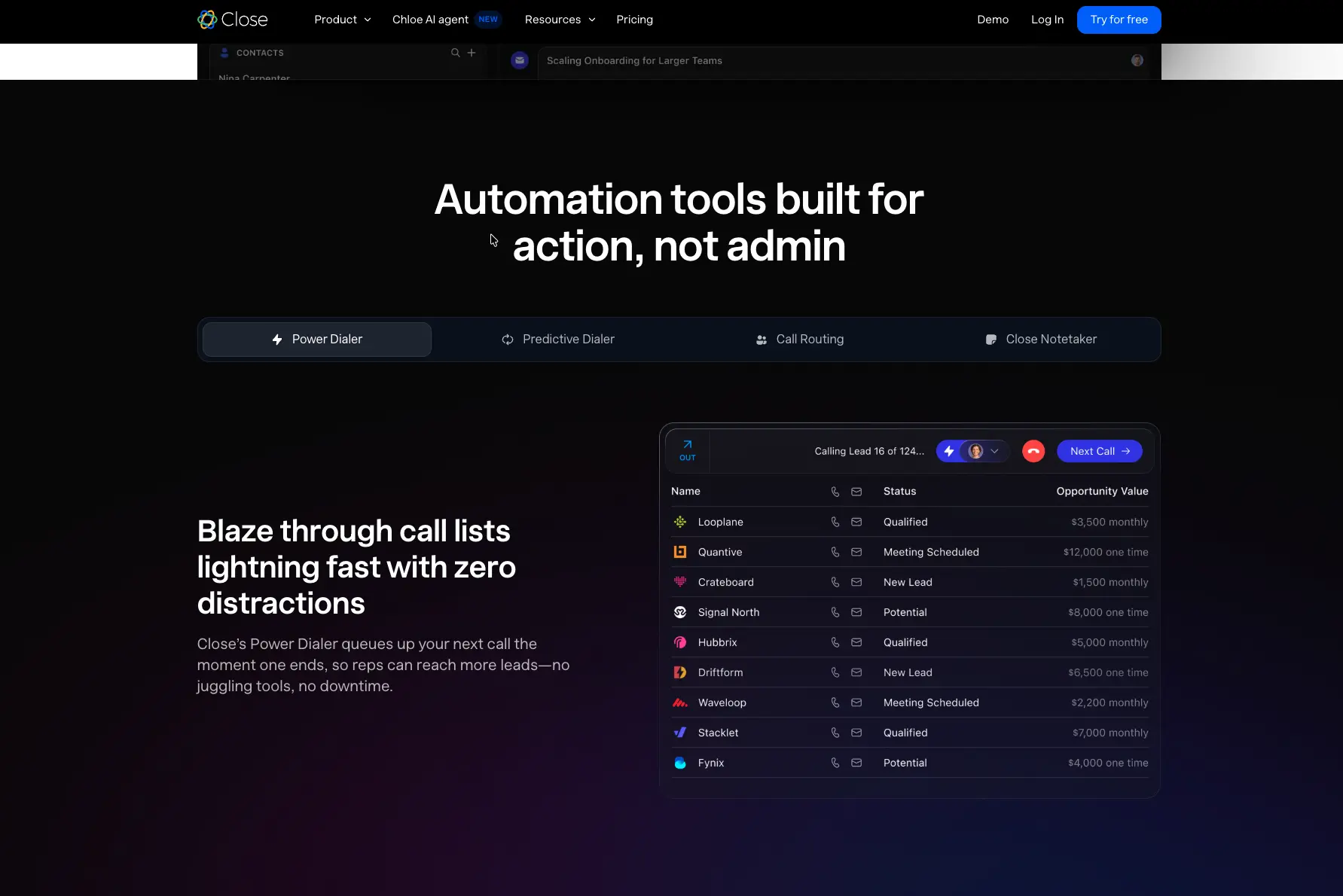
Close is a CRM built around a phone first sales process, with a dialer, SMS, and call recording built into every plan instead of sold as an add on. Reps working inbound leads and cold outreach in the same day get a real edge here that monday CRM cannot match without third party tools.
Calling minutes bill separately on top of the seat price, so budget that piece before you commit.
4. Pipedrive: best for a simple, visual pipeline
Price: $14/seat/month for Lite, billed annually. Best for: reps who just want to move deals forward.
Pipedrive is a sales pipeline tool built around one core screen: drag deals across stages and see what needs attention today. It skips the sprawling boards and automations monday CRM leans on, which is exactly why reps who want speed over customization tend to prefer it.
Email sync and reporting live one tier up, on the Growth plan at $39 a seat. Our Pipedrive alternatives list has more sales focused picks if Pipedrive itself is not the right fit.
5. Freshsales: best for support and sales in one place
Price: free for up to 3 users, or $9/user/month for Growth, billed annually. Best for: teams already on Freshdesk.
Freshsales is Freshworks' sales CRM, and it shares a login with Freshworks' help desk tools, so support tickets and deal history sit next to each other. Teams already running Freshdesk get the most value here, since contact records carry over without a separate integration to maintain.
The free plan includes a built in dialer, something monday CRM only offers through outside integrations.
6. Keap: best for ecommerce and service business follow up
Price: $299/month, usage based rather than per seat. Best for: automated follow up after a sale closes.
Keap combines CRM, email marketing, and invoicing into one flat priced plan aimed at service businesses and small ecommerce sellers who need automated sequences after a deal closes. It costs more up front than any other tool here.
The automation replaces several separate apps for teams that lean on it, which is why the flat price still pencils out for some.
7. Copper: best for Google Workspace heavy teams
Price: $23/seat/month, billed annually. Best for: reps who already live in Gmail.
Copper builds its entire interface inside Gmail and Google Calendar, so reps who already live in Google Workspace barely notice they switched tools. It is a narrower fit than monday CRM for teams outside that ecosystem.
For teams already inside Google Workspace, the switch is much smoother than moving to a standalone board based tool.
8. Nutshell: best for a team's first real CRM
Price: $13/user/month for Foundation, billed annually. Best for: small teams who have never used a CRM before.
Nutshell was built for small teams who do not want a steep learning curve. Contact management, pipeline stages, and basic reporting come standard on the entry plan.
It skips the wider feature sprawl that can make monday CRM feel like a project tool wearing a sales hat, which is exactly the point for a first CRM.
9. Attio: best modern, lightweight setup
Price: free for 3 seats, or $29/seat/month for Plus, billed annually. Best for: flexible data over rigid pipeline stages.
Attio is a newer CRM built around flexible data objects instead of fixed pipeline stages, closer in feel to a spreadsheet that understands your data than a traditional sales tool. It fits teams that want monday CRM's flexibility without the project management weight attached to it.
The free plan covers exactly 3 seats, so a coaching business my size pays nothing to start.
10. Salesforce Starter: best if you expect to outgrow everything else here
Price: $25/user/month, billed monthly or annually. Best for: teams planning to scale into enterprise tools.
Salesforce Starter Suite packages sales, service, and basic marketing tools into one entry plan, with a direct upgrade path into the full Salesforce platform as a company grows. It asks more of a new user upfront than monday CRM does.
Nothing else on this list scales as far without a full replatform later, which is the entire reason to pay more now.
monday CRM vs HubSpot: which one actually costs less
For a team of 3, monday CRM's Basic plan runs $36 a month billed annually, seat minimum included whether you need all 3 logins or not. HubSpot CRM's free plan covers the same 3 people at $0, and its paid Starter tier for 3 seats runs $45 a month, only slightly more than monday once you add HubSpot's marketing tools monday does not include at that price. For most small teams comparing the two, the free HubSpot tier removes the seat math entirely.
How to Pick the Right monday CRM alternatives
Startups and solo founders get the most value from HubSpot CRM or Zoho CRM, since both let you pay for exactly the seats you use instead of monday's forced 3 seat floor. Teams that spend most of the day on the phone should start with Close, since the built in dialer alone can replace a separate calling tool most other CRMs on this list still need.
If your team already lives inside Gmail and Google Calendar, Copper removes almost all of the setup friction other CRMs require, and the switch tends to happen in an afternoon rather than a week. Teams expecting to hire fast and grow into enterprise tools within a year or two should look at Salesforce Starter instead, since it is the only option here built to scale that far without a full switch later.
If you want the wider CRM landscape before narrowing to these ten: our best CRM software for small business roundup prices ten tools on annual versus monthly billing, several of which overlap with this list.
FAQ: monday CRM alternatives
Is there a free alternative to monday CRM?
Yes. HubSpot CRM, Zoho CRM, Freshsales, and Attio all offer permanently free plans, not just trials, and none force a 3 seat minimum the way monday CRM's paid plans do.
What are the best alternatives to monday CRM?
HubSpot CRM and Zoho CRM top the list for cost, Close for call heavy teams, and Nutshell or Pipedrive for the easiest setup without training, since both focus on one pipeline screen instead of monday's wider board and automation system.
Is monday CRM better than HubSpot?
It depends on the job. monday CRM wins on visual customization for teams that already use monday.com boards, while HubSpot wins on cost for small teams because its free plan has no seat minimum and no expiration date.
Does monday CRM have a free plan?
No. monday CRM offers a 14 day free trial only. After that, every plan requires a minimum of 3 paid seats, starting at $12 per seat per month billed annually.
What are the top monday CRM competitors for sales teams?
Close, Pipedrive, and Salesforce Starter are the three most sales focused competitors here, each built around a phone and pipeline first workflow rather than a general work management board.
Where to start
If price is the only thing holding you back from switching, HubSpot CRM or Zoho CRM will get a small team running today without a card on file. If your team's real bottleneck is call volume, spend a week inside Close before comparing anything else.
And if you are still not sure, the 14 day trials on Pipedrive, Nutshell, and Copper are short enough to test your actual pipeline, not just a demo board, before you commit to a seat count you might not need.