
A client asked me to sanity check a MuleSoft quote against lighter options before signing a three year contract. I could not run that check the way I usually do. Every official MuleSoft page said the same three words: contact for pricing. No number to react to, no plan page to screenshot, nothing.
So I flipped the project. I priced nine of the twelve tools below straight from their own pricing pages, tested the three the client was most likely to actually use, Zapier, n8n, and Make, against a small copy of the real integration, and left MuleSoft's own price column blank. That is the honest answer, and the gap became the story.
If you run lean and just need to connect a handful of SaaS tools, start with Zapier for the least setup and the clearest task based price. If you want that same lightweight approach but plan to self host and touch the code, n8n's free community edition and published paid tiers give you a real number to plan around.
If you are actually replacing MuleSoft at the enterprise level, Boomi is the only enterprise grade platform on this list with one public price point, its pay as you go plan, to anchor a negotiation against.
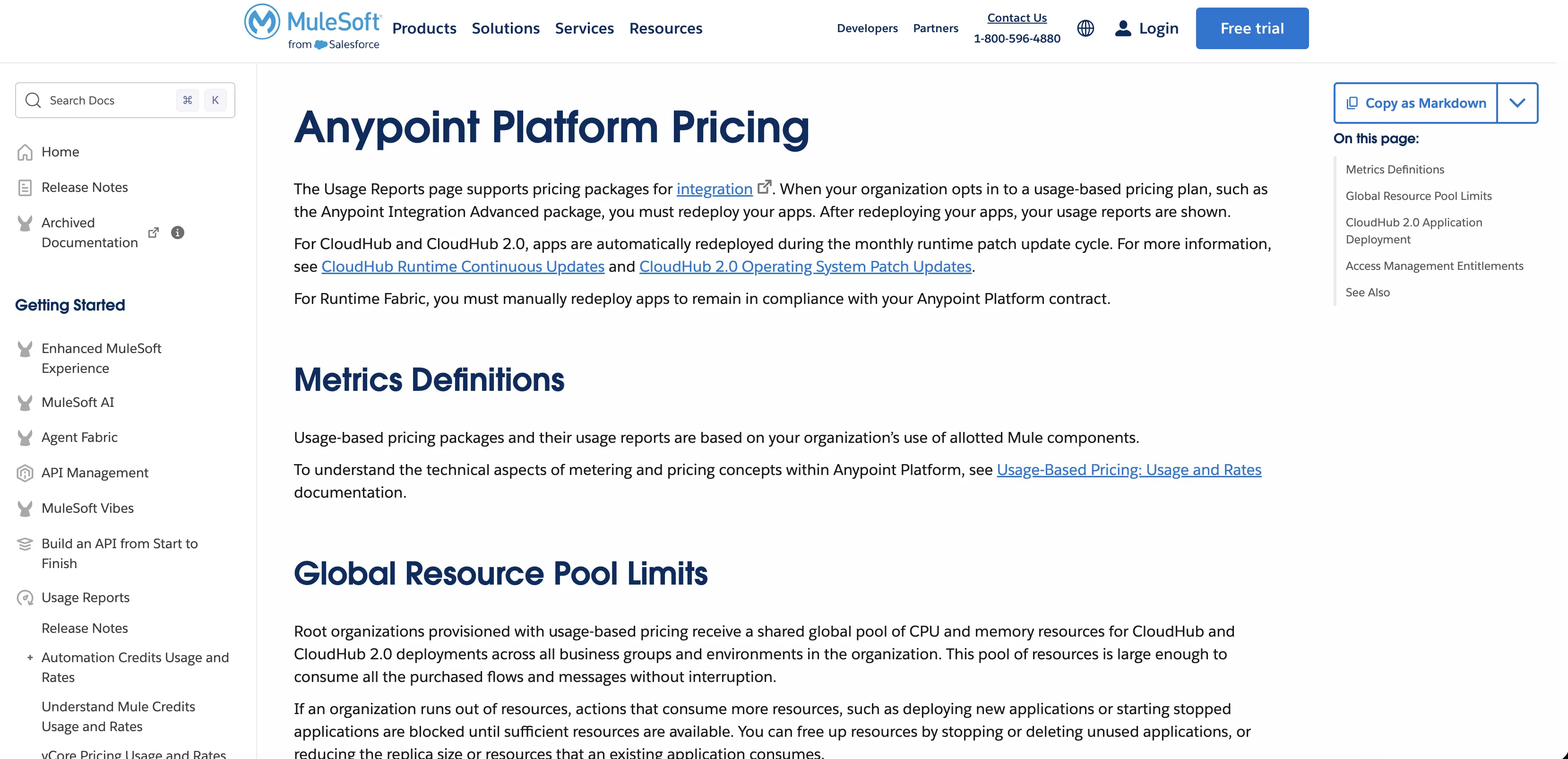
Here's what that screenshot showed me: three edition names, a note about flows and messages as the billing units, and a button. No number. I checked both the MuleSoft documentation site and the Salesforce owned pricing page, since Salesforce bought MuleSoft in 2018 for 6.5 billion dollars, and both say the same thing.
Why buyers go looking for a MuleSoft alternative
MuleSoft is not a bad product. Anypoint Platform connects APIs, older systems, and cloud apps through more than 1,500 prebuilt connectors, and it runs on AWS, Azure, Google Cloud, Kubernetes, or on your own servers. MuleSoft's own marketing, citing Forrester research, claims a 70 percent cut in ongoing API management effort. That can be true and the platform can still be the wrong fit for a given team.
The complaints that show up again and again in verified reviews are cost and complexity, not missing features. A Senior Technical Lead reviewing the platform on G2 in May 2026 described the licensing cost as high enough that it becomes a difficult conversation with executives at renewal time.
An Application Development Associate Manager, reviewing the platform on G2 in June 2026, put it more directly: "people hesitate to switch to MuleSoft due to its high costs." You can read more verified reviews on G2 directly.
Add a real learning curve. MuleSoft uses its own data transformation language, DataWeave, and a small business reviewer on G2 rated the platform well overall but noted that DataWeave takes real time to get comfortable with. For a small team, or a mid sized company that only needs a fraction of what an enterprise service bus was built to do, that combination of hidden pricing and DataWeave fluency is often reason enough to look elsewhere.
Why can't you find a real MuleSoft price anywhere
This is the gap none of the other roundups walk through. MuleSoft prices three editions, Integration Starter, Integration Advanced, and API Management Solution, using two metrics: Mule Flows, which measures how many integrations you run, and Mule Messages, which measures how much data moves through them. Every account signs an annual contract, and the actual rate per flow or message is negotiated, not published.
That is different from most of the alternatives in this list. Zapier, n8n, Make, Apigee, and Kong all publish real numbers you can check without talking to a salesperson.
Boomi publishes one entry level number. Workato, Celigo, and Jitterbit stay fully quote based, same as MuleSoft. Knowing which bucket a tool falls into before you request a demo saves a week of back and forth, so I built the entire lineup below around that split.
ESB vs iPaaS: what MuleSoft actually is now
MuleSoft started life as Mule ESB, an enterprise service bus. An ESB is a piece of middleware that sits between your systems and routes, transforms, and delivers messages between them, instead of every app connecting directly to every other app.
If you searched "MuleSoft ESB alternatives" instead of just "MuleSoft alternatives," you are probably thinking about that older architecture pattern, maybe because your team still runs Mule ESB or Mule Runtime rather than the full Anypoint Platform.
Almost nobody markets a product as an ESB anymore. The industry term shifted to iPaaS, integration platform as a service, which describes a cloud hosted version of the same idea with more prebuilt connectors and less server management.
Every tool covered here, from Boomi to Apache Camel, is either a direct iPaaS replacement for what an ESB used to do or a narrower API management layer that handles one piece of it. None of the top ranking MuleSoft alternatives articles I checked explain that shift in plain terms, so if you came here still typing "ESB," this is confirmation you are in the right place.
Open source and self hosted MuleSoft alternatives
If your team wants to own the infrastructure and avoid a subscription entirely, three options stand out, and no other MuleSoft roundup I found groups them together this way.
Apache Camel
Apache Camel is a free, open source integration framework run by the Apache Software Foundation under the Apache License 2.0. It has been in production since 2007, ships more than 350 connectors, and runs on Java, Spring Boot, or Quarkus. There is no vendor and no bill, but you are also fully responsible for hosting, upgrades, and support.
WSO2 API Manager
WS02 API Manager is a fully open source API management platform with hosted and hybrid cloud options if you later want managed support. It gives you a genuine no cost path into API governance without MuleSoft's contract.
n8n
n8n's Community Edition is free and self hosted, with more than 200,000 stars on GitHub. If your integrations lean toward workflow automation rather than deep legacy system connections, it is the lightest self hosted option here.
Is there a MuleSoft alternative for a small team
Most MuleSoft alternatives articles, including MuleSoft's own site, are written for enterprise buyers, and the tools mentioned assume a dedicated integration team.
If you are a two or three person operation, or a solo consultant like the client I mentioned above, most of this list is overbuilt for you. Zapier, n8n, and Make were all built for exactly this size of team, publish real prices under 25 dollars a month at the entry tier, and need no dedicated developer to run.
The 12 alternatives, grouped by who actually needs them
Lightweight automation, for solo teams and small businesses
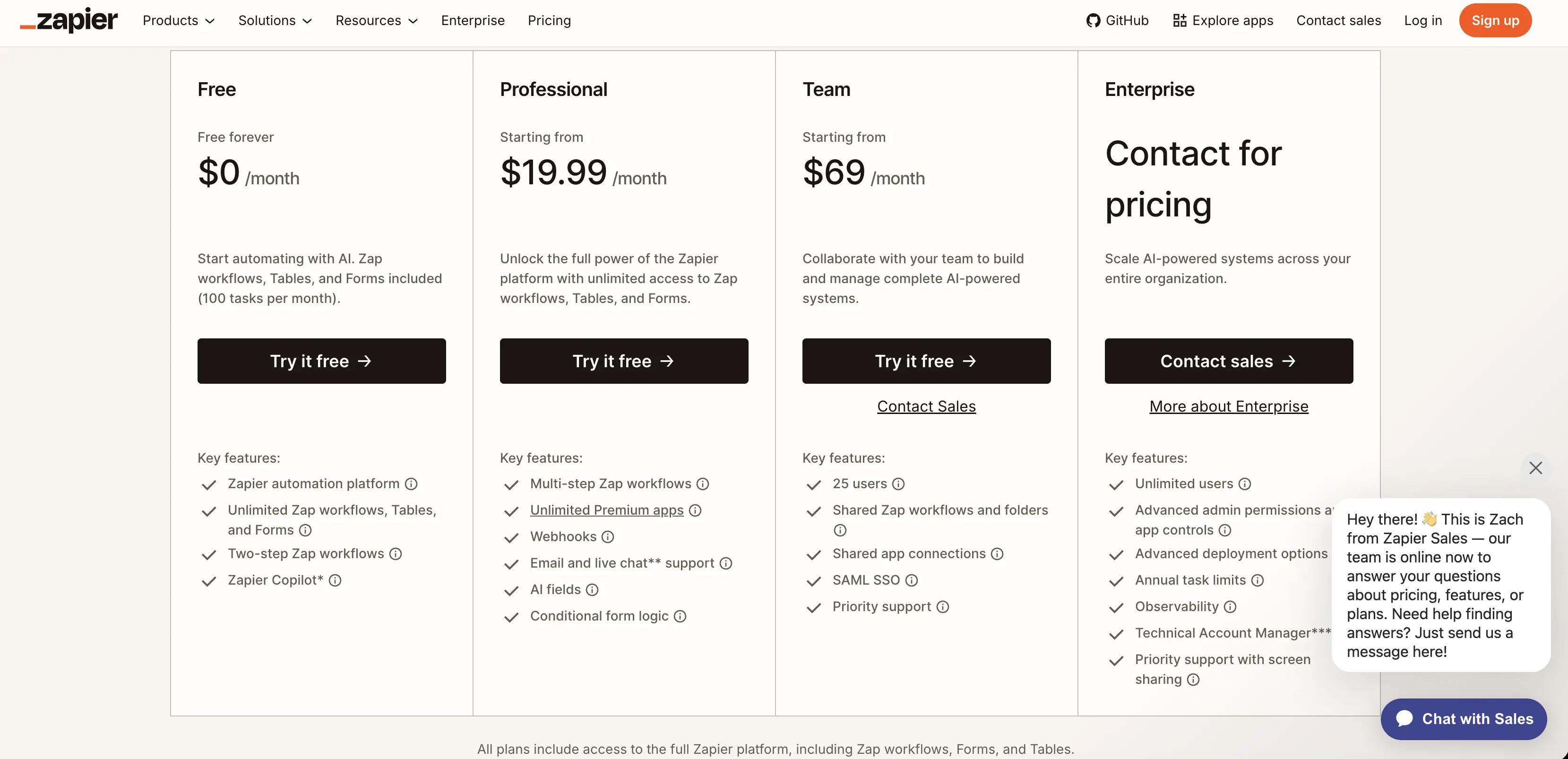
1. Zapier. Best for teams with no dedicated integration developer. Free plan covers 100 tasks a month for one user. Zapier's published pricing starts Professional at 19.99 dollars a month with multi step workflows plus unlimited premium apps, and Team at 69 dollars a month for 25 users.
I tested the full field of Zapier alternatives separately if this is the tier you actually need.
For a broader, category level view of where MuleSoft sits against the rest of the iPaaS market, see our best iPaaS platforms in 2026 roundup.
2. n8n. Best for developers who want the lightweight approach but plan to self host. n8n's cloud pricing runs Starter at 20 euros a month billed annually for 2,500 workflow executions, and Pro at 50 euros a month for 10,000 executions.
The Community Edition is free and self hosted with no execution cap beyond your own server. I broke down where n8n's concurrency limits actually bite in a separate piece.
3. Make. Best for teams that want a visual, drag and drop workflow builder with more logic branching than Zapier offers.
Free plan includes 1,000 operations a month at no cost. Core starts at 12 dollars a month, Pro at 21 dollars, and Teams at 38 dollars, each scaling with operation volume.
Mid market and enterprise iPaaS, for ops teams replacing MuleSoft directly
4. Boomi. Best for teams that want an enterprise grade platform with at least one real number to start from. Every named tier, Standard through Enterprise Plus, is quote based, but Boomi's Pay As You Go plan publishes 99 dollars a month plus usage with no contract required, alongside a 30 day free trial.
5. Workato. Best for mid market and enterprise teams that need both IT led and business user led automation in one platform. Pricing is fully quote based.
The public pricing page states plans are "designed to support organizations of all sizes" but shows no dollar figures.
6. Celigo. Best for teams doing heavy ecommerce or SaaS to SaaS integration work.
Three editions, Standard, Professional, and Enterprise, are all quote based, with a 30 day free trial through integrator.io.
7. Jitterbit. Jitterbit is an integration platform that pairs iPaaS with its own API management layer. Best for teams that want both from one vendor without MuleSoft's price tag.
Pricing runs Standard, Professional, and Enterprise, all quote based with no published dollar amounts.
API management and gateways, for teams that mainly need API control
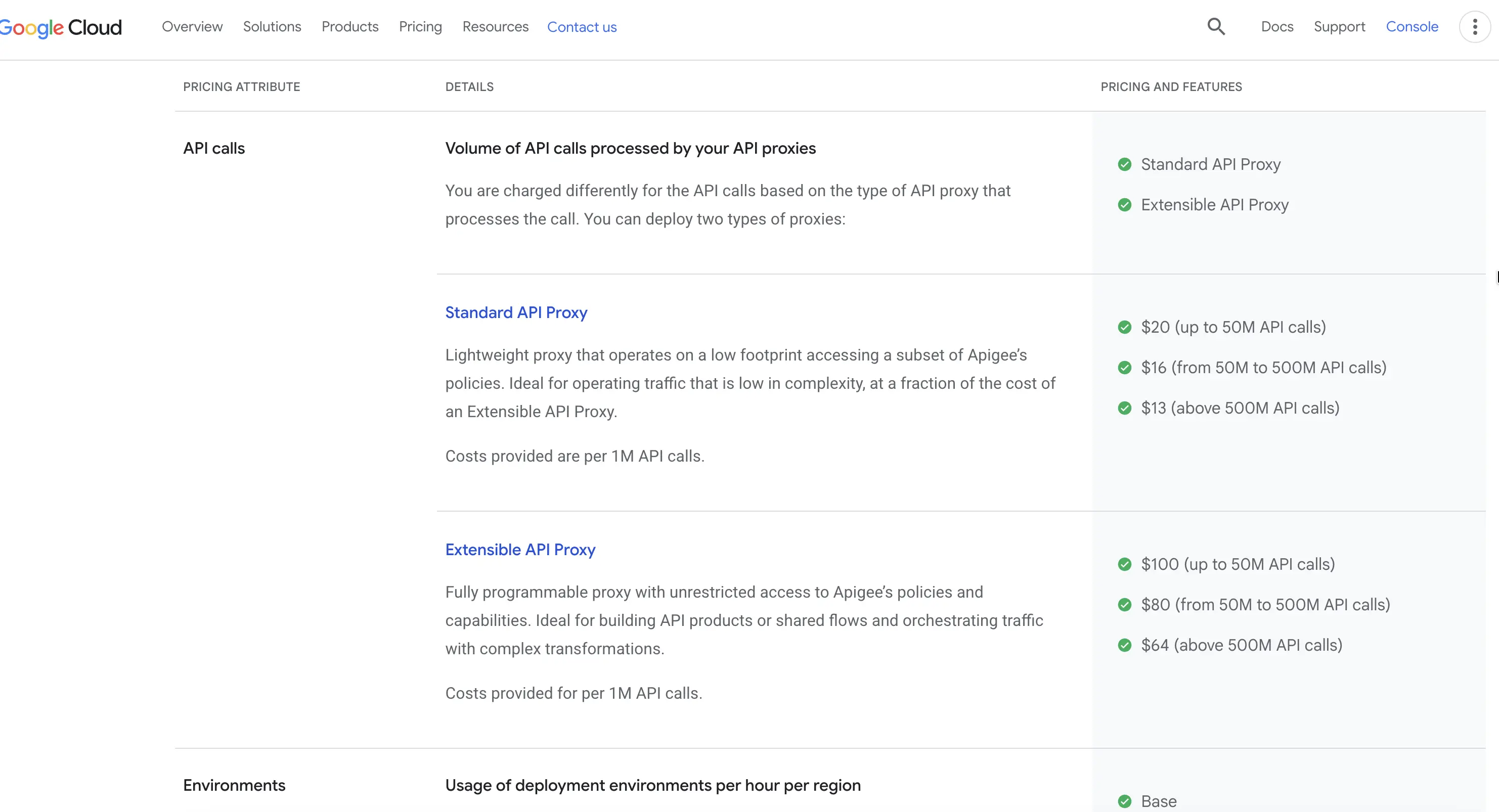
8. Apigee (Google Cloud). Best for teams that primarily need API traffic management rather than full integration middleware. Apigee's pay as you go pricing starts at 20 dollars per 1 million standard API calls, dropping to 13 dollars per 1 million above 500 million calls, plus environment fees starting at 365 dollars a month. A 60 day free evaluation is available.
9. Kong. Kong is an API gateway, a checkpoint that sits in front of your APIs to manage traffic, security, and access. Best for teams running microservices on Kubernetes.
Kong Konnect's Plus tier includes 1 million API requests, then charges 200 dollars a month per additional 1 million, with a 30 day free trial. Kong Gateway is also available as free open source software.
10. Azure API Management. This is Microsoft's own API gateway and integration service, built into the Azure cloud. Best for teams already committed to the Microsoft ecosystem.
Tiers run from a serverless Consumption plan billed per operation up to Premium v2 for high volume enterprise use, though Microsoft's own pricing page shows tier names without published dollar amounts and points you to its pricing calculator instead.
The remaining open source picks, for developer led teams
11. Apache Camel. Covered above. Best for developers who want a free, code first integration framework with no vendor lock in.
12. WSO2 API Manager. Covered above. Best for teams that want open source API governance with an optional path to managed hosting later.
Where MuleSoft still wins
None of this means MuleSoft is a bad choice for everyone. If your company already runs deep on the Salesforce ecosystem, has a dedicated MuleSoft certified team, or needs to modernize decades old mainframe or EDI connections that most of the newer iPaaS tools were never built to touch, MuleSoft's maturity and connector depth are hard to replace.
The 70 percent effort reduction MuleSoft cites is aimed at exactly that scale of large, established integration estate, not a five person startup automating its signup flow. The honest answer is that scale, not features, decides which side of this list you belong on.
Picking the right MuleSoft alternative for your situation
If you're a solo consultant or a two to three person team: start with Zapier or Make. You will be running workflows the same day you sign up, and the entry tier price is public.
If you're a mid market ops team replacing MuleSoft directly: compare Boomi's pay as you go plan against Workato and Celigo quotes side by side, and use Boomi's 99 dollar number as your negotiating anchor.
If you're enterprise IT already inside the Salesforce ecosystem: get a MuleSoft renewal quote and a Boomi or Workato quote in the same week, and force both vendors to price against each other.
If you're a developer who wants to self host and own the stack: Apache Camel or WSO2 API Manager cost nothing beyond your own server time, and n8n's Community Edition covers lighter workflow automation the same way.
If you're already running on AWS, Azure, or Google Cloud: look at Apigee or Azure API Management first. You will bill through infrastructure you already pay for, and support tickets go through a vendor you already have a relationship with.
Frequently asked questions
Why can't I find MuleSoft's actual price anywhere?
MuleSoft prices its three editions by Mule Flows and Mule Messages under an annual contract, and the rate is negotiated per account rather than published. Both the official MuleSoft documentation and the Salesforce pricing page confirm this directly.
Is there a MuleSoft alternative that works for a small team, not just an enterprise?
Yes. Zapier, n8n, and Make were all built for small teams, publish entry level prices under 25 dollars a month, and need no dedicated integration developer to operate.
What does ESB actually mean, and do I still need one?
ESB stands for enterprise service bus, middleware that routes and transforms messages between systems instead of connecting every app directly. Most vendors now call the same idea iPaaS, so if you are shopping by the ESB label, look at iPaaS platforms like Boomi, Workato, or Jitterbit.
How long does switching off MuleSoft actually take?
It depends on scope. Simple integrations can move in four to eight weeks. Enterprise migrations involving custom APIs or EDI workflows commonly run three to six months, based on the migration timeline Celigo publishes for its own onboarding process.
Is there a free or open source alternative to MuleSoft?
Yes. Apache Camel is fully open source under the Apache License 2.0, WSO2 API Manager is open source with optional paid hosting, and n8n's Community Edition is free to self host.
What's the difference between a MuleSoft alternative and Zapier or n8n?
Scale and depth. Zapier and n8n handle SaaS to SaaS workflow automation well but were not built for deep legacy system integration or the governance controls a large enterprise ESB replacement needs. Tools like Boomi, Workato, and Jitterbit sit in between.
Which MuleSoft alternative is easiest for a non technical team?
Zapier, with its visual builder and no code setup, followed closely by Make. Both let a non developer build a working integration without writing code.
MuleSoft alternatives Specification
Tool | Deployment | Pricing model | Best for |
|---|---|---|---|
Zapier | Cloud only | Published, from $19.99/mo | Solo teams, no dedicated developer |
n8n | Cloud or self hosted | Published, from €20/mo, free self hosted | Developers wanting lightweight self hosting |
Make | Cloud only | Published, from $12/mo | Visual builders needing more logic |
Boomi | Cloud, hybrid | One public rate, rest quote based | Mid market replacing MuleSoft directly |
Workato | Cloud, hybrid | Quote only | Mid market and enterprise automation |
Celigo | Cloud | Quote only | Ecommerce and SaaS integration |
Jitterbit | Cloud, hybrid | Quote only | Combined API management and iPaaS |
Apigee | Cloud | Published, from $20/1M calls | API traffic management |
Kong | Cloud, hybrid, self hosted | Published Plus tier, free open source Gateway | Kubernetes and microservices |
Azure API Management | Cloud | Tier named, rates via calculator | Microsoft centric teams |
Apache Camel | Self hosted | Free, open source | Developers wanting no vendor lock in |
WSO2 API Manager | Cloud, hybrid, self hosted | Free open source, paid cloud optional | Open source API governance |
Where to start
If you only take one thing from this, take the split. Check which bucket a tool sits in, published price or quote only, before you request a single demo. That one question saves more time than any feature comparison will.