

Quick picks
Workato: contact sales; best for an enterprise team that wants one AI-heavy platform and already has budget approved.
Zapier: free for 100 tasks a month, best for a small team automating its first workflow today.
Merge: free for up to three connected accounts, best for a SaaS company selling integrations to its own customers.
A Hacker News thread from n8n's own 2019 launch still gets shared in integration circles seven years later. It sits at 728 points and 196 comments, with the founder answering in the replies about exactly who his tool was built for.
I found it again last month while pricing out an integration stack for a client, and it summed up the whole iPaaS market in one line. Everyone claims to be the alternative. Almost nobody names a price.
iPaaS stands for integration platform as a service. It is software that connects your apps, moves your data between them, and runs the logic in between, so you stop writing custom code every time two systems need to talk.
I checked ten of these platforms myself this month. I fetched each one's real pricing page, sorted them by who they actually serve, and flagged which ones still hide behind a sales call in 2026.
Pricing and features on this page were verified on August 27, 2026, directly from each platform's own official pricing page.
Why most 2026 iPaaS lists don't actually help you pick one
Pages owned by MuleSoft, SnapLogic, and several smaller vendors each rank their own product first, then fill out the rest of the list with the same eight or nine household names. None of that is wrong. It does explain why almost every "best of" list online reads the same.
There is close to nothing written by someone who is not selling one of the tools. One of the only non vendor entries in the results is a bare alphabetical list with no pricing, no FAQ, and no guidance on who each tool actually fits. This list is neither. I do not sell an iPaaS platform, and every price below came from the platform's own page, checked this week.
A tool still showing up on 2026 lists that shut down in 2021
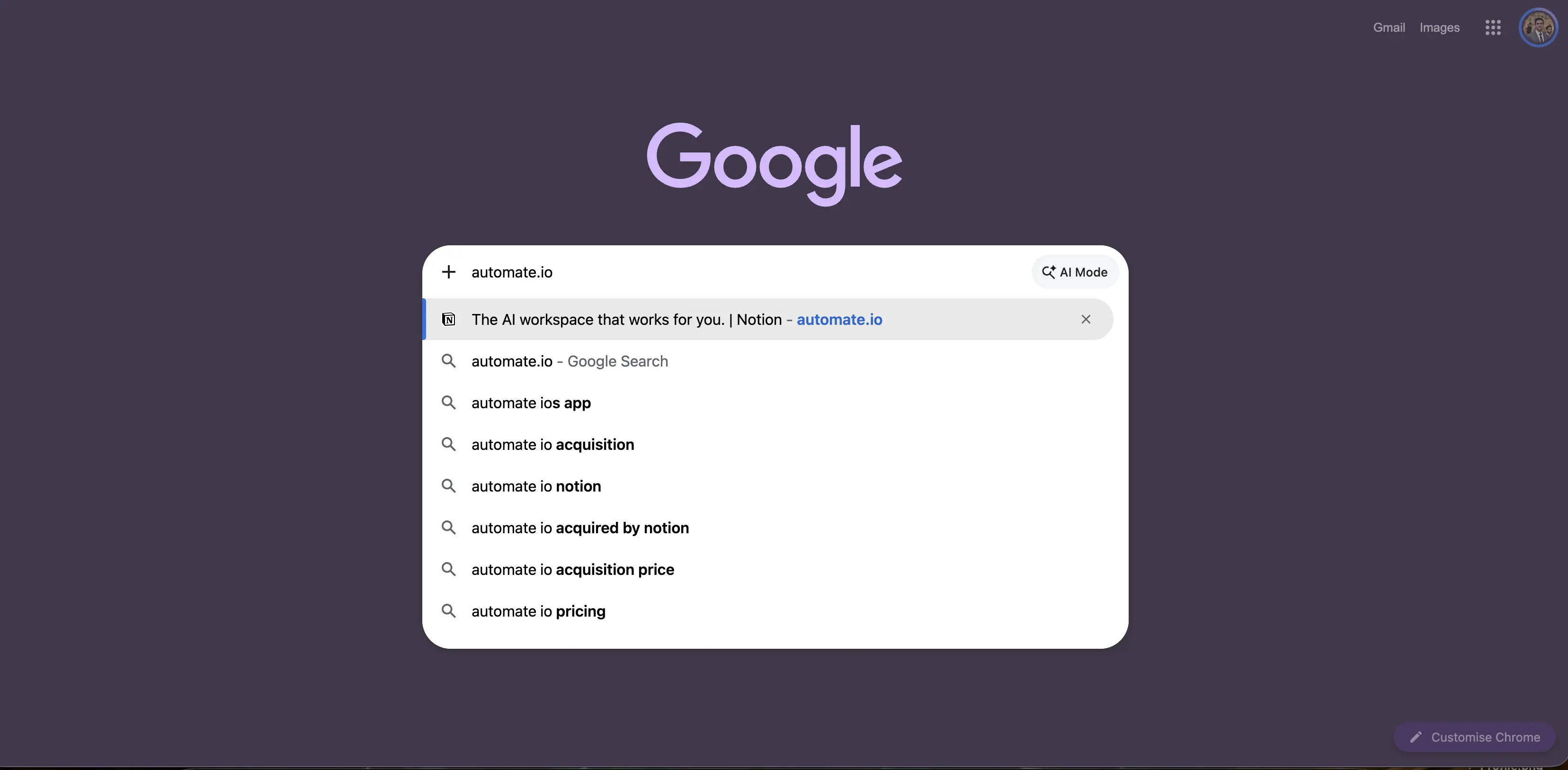
One competing roundup lists a last updated date in June 2026 and still recommends Automate.io as a live option. Automate.io redirects straight to notion.com today. Notion bought the company and closed it down back in 2021.
A five year old shutdown sitting inside a page dated this June is not a small mistake. It means nobody actually rechecked that list before republishing the date.
It is a useful test before you trust any "updated" iPaaS roundup: pick one tool near the bottom of the list and check whether its website still loads.
Enterprise iPaaS, no code automation, or embedded integration: pick your category first
Enterprise iPaaS is built for an IT team managing dozens of systems, usually with a dedicated integration budget and a procurement process behind it.
Workato, Boomi, MuleSoft, and SnapLogic sit here, and this is also where most enterprise integration platform spend actually goes.
No code automation is for a small team or a single person who needs two apps talking today, with no developer required. Zapier and n8n are the names most people already know from this group.
Embedded iPaaS differs from both. It is for a software company that needs to offer integrations inside its own product, to its own customers, not for internal use. Merge, Paragon, and Prismatic sell specifically into this category, and none of them show up on most general "best iPaaS" lists because they are not competing with Zapier at all.
Data focused iPaaS leans toward moving, syncing, and backing up records between databases, warehouses, and business apps rather than triggering live workflow steps. Skyvia is the clearest example on this list.
The short list: Best iPaaS platforms in 2026 by category
Enterprise iPaaS
Workato.
Contact sales only, with no free trial listed on its own pricing page. Workato positions itself as enterprise iPaaS with embedded integrations, agentic AI, API management, and data orchestration built into one platform.
One G2 reviewer, Sreenath B., a principal engineer, put it this way: "Workato helps us build complex integrations at lightning speed." It fits a team that already has budget set aside and wants one platform instead of stitching several together.
Boomi.
Pay as you go starts at $99 a month plus usage, with a 30 day free trial and no contract required at that tier. Boomi describes itself as the infrastructure connecting integration, API management, and data work into one system.
Its entry tier is the closest thing to a self serve enterprise price on this list, though the higher tiers still route to a sales quote.
MuleSoft.
Contact sales only, though a 30 day free trial is available with no card required. Owned by Salesforce, MuleSoft calls itself the unified control plane that connects, automates, and governs an enterprise, from APIs to AI agents.
If your stack already runs on Salesforce, that connection is the real draw. For a wider set of competitors, see our MuleSoft ESB alternatives guide.
SnapLogic.
Package based pricing across Essential, Professional, and Enterprise One tiers; all contact sales, with unlimited pipelines and data movement included at every level. SnapLogic markets itself around predictable, package based enterprise pricing rather than per task billing. We cover more SnapLogic competitors in our SnapLogic alternatives guide.
No code automation
Zapier.
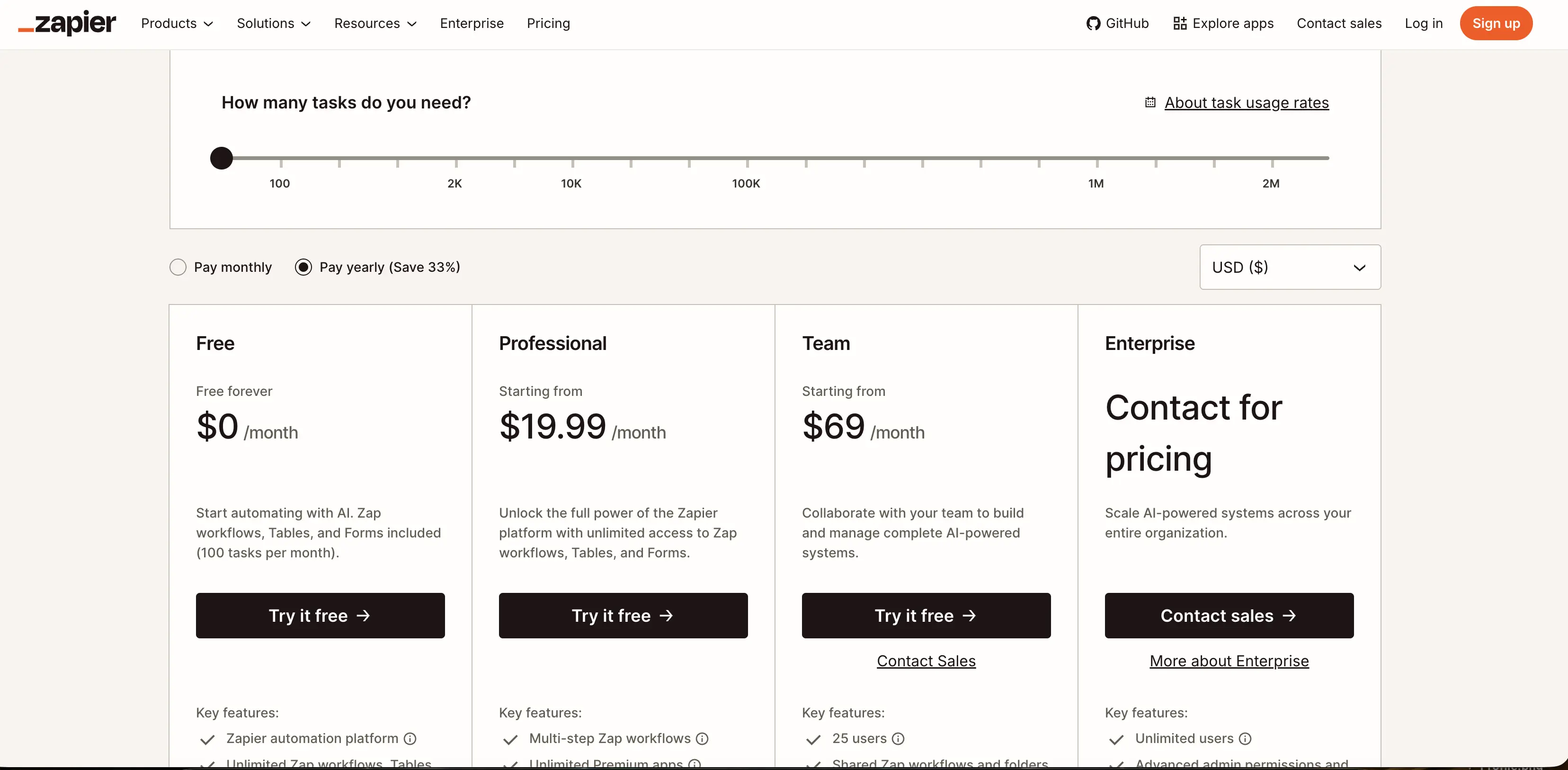
Free for 100 tasks a month, Professional starts at $19.99 a month, Team starts at $69 a month, and Enterprise is contact sales.
A task counts each time a workflow completes an action, so real cost depends on how much you automate, not how many apps you connect. It remains the default answer for a small team automating its first few workflows.
Full competitor breakdown in our Zapier alternatives guide.
n8n.
Starter is 20 euros a month, Pro is 50 euros a month, Business is 667 euros a month, and there is a free, self hosted community edition if you are comfortable running it yourself.
That Hacker News thread from the intro was n8n's own launch post, and the debate in the comments, licensing questions, integration count against Zapier, has aged into a real answer: self hosting is the actual reason people pick it over Zapier, not price alone. More options in our n8n alternatives guide.
Embedded iPaaS
Merge.
Free for up to three connected accounts, then $650 a month for up to ten, with each additional account priced at $65.
Merge builds one integration you ship once, connecting your product to the HR, payroll, recruiting, CRM, and accounting platforms your customers already use. It is the first tool on this list built for a product team, not an ops team.
Paragon.
Contact sales across its Pro and Enterprise tiers, with a free trial available on request. Paragon calls itself integration infrastructure for SaaS teams shipping native integrations, workflow logic, and managed authentication faster than building it in house.
Pricing scales by connected user count rather than a flat monthly fee.
Prismatic.
Scale, Enterprise, and Custom tiers, all contact sales through a demo request. Prismatic is built specifically for B2B software companies embedding integrations into their own product, and it bills by instance rather than by API call or execution, which matters if your usage is spiky.
Data focused iPaaS
Skyvia.
Free for up to 10,000 records a month, Basic starts at $99.79 a month or $799.20 billed annually, Standard is $199 a month, and Professional is $499 a month.
Skyvia leans toward syncing and backing up records across cloud apps and databases rather than triggering live, event based workflows. Its own competitors are covered in our Skyvia alternatives guide.
Which of these actually show a real price instead of contact sales
Five of the ten publish a real number on their own site: Zapier, n8n, Boomi, Merge, and Skyvia. The other five, Workato, MuleSoft, SnapLogic, Paragon, and Prismatic, keep every tier behind a sales conversation, including their entry level plan.
The split roughly tracks who each one sells to. Enterprise and embedded platforms gate pricing because deals get negotiated. Tools built for a single team or a smaller company post a number because the buyer expects to self serve.
If a real price matters more to you than anything else here, start with Zapier, n8n, Boomi, Merge, or Skyvia, and only book a sales call once you already know roughly what you would pay.
Add every subscription you currently run into the SaaS spend calculator before you add another one.
Where Microsoft Power Automate actually fits in
Microsoft Power is usually bundled into an existing Microsoft 365 or Dynamics license rather than sold as a standalone iPaaS product. That makes it hard to compare on price against Zapier or n8n.
For a lot of buyers, the real cost already sits inside a license they pay for anyway.
If your company already runs on Microsoft 365 and most of what you need to connect are Microsoft's own products plus a handful of common SaaS apps, check what your existing license already includes before paying for one of the ten platforms above. For deep, non Microsoft integrations at scale, it usually is not built for that job, and the platforms above are.
Decision guide: Picking the best iPaaS solution for your situation
If you are... | Look at | Why |
|---|---|---|
An enterprise IT team with a procurement process | Workato or Boomi | Boomi has a real self serve entry price, Workato's platform reach is wider for AI heavy workflows |
A small team automating your first workflows | Zapier or n8n | Both post real prices, and n8n's self hosted option keeps cost near zero if you can run it yourself |
A SaaS company building integrations for your own customers | Merge, Paragon, or Prismatic | These are the only three built to sell integrations as part of your product, not to run your internal ops |
A team already deep in the Salesforce ecosystem | MuleSoft | Salesforce owns it, and that connection is the main reason to pick it over a cheaper option |
A team syncing and backing up records more than running live workflows | Skyvia | It is priced and built around records moved, not tasks triggered |
FAQ
What does iPaaS actually mean?
iPaaS stands for integration platform as a service. It is a cloud tool that connects your apps, moves data between them, and runs workflow logic automatically, without you building and maintaining custom code for every connection.
Is Zapier an iPaaS platform?
Yes, though it sits at the no code, small team end of the category. Enterprise buyers often reserve the term for platforms like Workato or MuleSoft, but Zapier meets the technical definition, and it increasingly gets counted as one.
What is the real difference between iPaaS and embedded iPaaS?
Standard iPaaS connects tools for your own team's internal use. Embedded iPaaS, like Merge or Paragon, gets built into a software product so that company's customers get integrations without your team building each one by hand.
How much does an iPaaS platform actually cost in 2026?
It ranges from free to thousands a month. Zapier, n8n, Boomi, Merge, and Skyvia post real prices starting between free and roughly $650 a month. Workato, MuleSoft, SnapLogic, Paragon, and Prismatic require a sales call for every tier.
Does the Gartner Magic Quadrant for iPaaS matter for a small team?
Not much. Gartner's quadrant gets built around enterprise criteria like governance and global support, categories a five person startup rarely needs. It matters far more for the enterprise platforms on this list than for a Zapier or n8n level buying decision.
Getting started
Pick your category before you pick a tool. An enterprise IT team, a small team automating its first workflow, a SaaS company embedding integrations into its own product, and a team mostly syncing records are not shopping for the same thing, even though every list on the first page of Google ranks them against each other anyway.
A tool that costs more can still win on return; the SaaS ROI calculator shows when.
If you already know your category, start with the platform's own pricing page, not a roundup, mine included. Five of the ten platforms above show you a number in under a minute. The other five book you a call. Both are fine. Just go in knowing which one you are getting.