
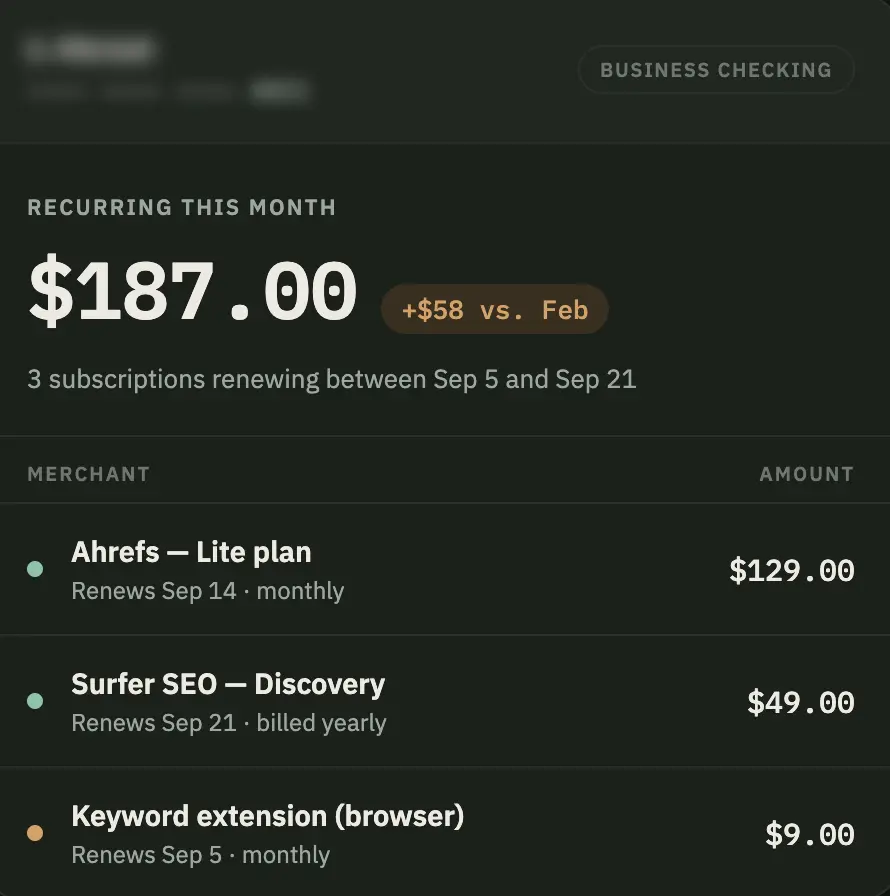
My SEO tool subscriptions hit $187 a month before I noticed. That number stung. Three weeks of actually pricing what I was paying for reshaped this whole list, and it changed which tools made the cut.
Ahrefs for backlink and competitor depth. Semrush if you want one dashboard that also tracks AI search visibility. SE Ranking if you are an agency that needs several seats without paying enterprise rates. Google Search Console first, always, because it is free and it is the only tool with data straight from Google.
I run a small portfolio of web properties and a newsletter, and I take on marketing and ops work for a handful of client businesses. I pay for every SaaS tool I write about out of my own budget, so when a subscription creeps past what it is worth, I feel it directly. That is what sent me looking through my card statement this year, and what turned into this list.
Why the free plan stops being enough
Google Search Console and a spreadsheet cover the basics: which pages get clicks, which queries you show up for, whether something broke. That is enough, on its own, for a small site with a handful of pages.
It stops being enough the moment you manage more than one site, chase competitors actively building backlinks, or try to figure out why a page dropped ten spots overnight. GSC will tell you the what.
It will not tell you the why, and it will not tell you what a competitor is doing that you are not.
That gap is where paid tools earn their keep, and where they also start racking up a bill nobody budgeted for on purpose. I am not the only one who has noticed. A Hacker News thread from May 2026, where a founder described building a cheaper SEO tool after getting tired of a $100 a month bill, pulled in over a dozen comments arguing about whether the pricier platforms are worth what they charge.
The disagreement in that thread is basically the same one running through this whole article.
The core SEO platforms, compared
Tool | Best for | Starting price (Sept 2026) | Free plan | API / MCP access |
|---|---|---|---|---|
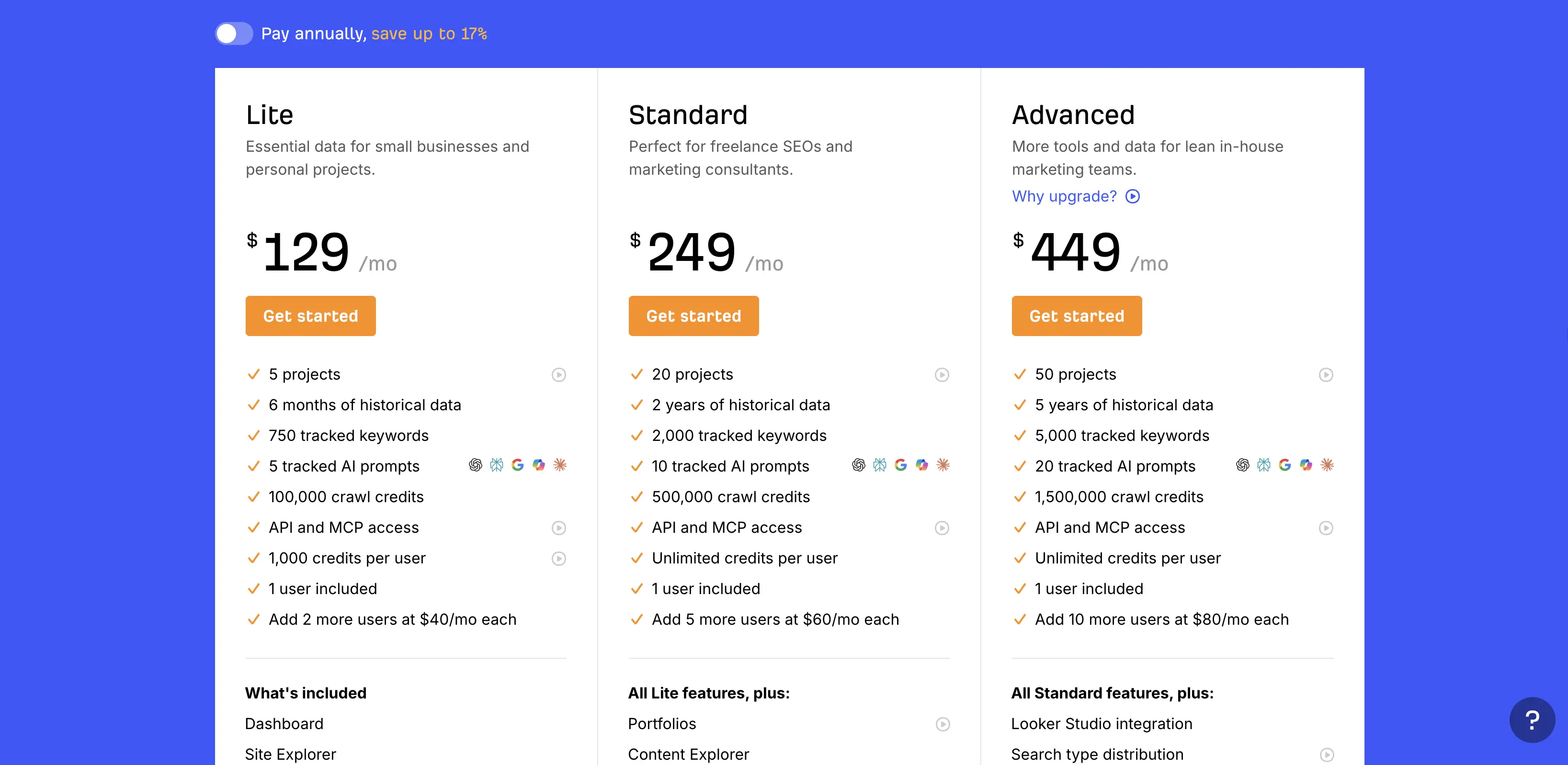
Ahrefs | Backlinks and competitor depth | $129/mo (Lite) | Limited, verified site owners only | Yes, paid API plus official MCP server |
Semrush | One dashboard, keyword to content | $139/mo (SEO plan) | 7 day trial, no free plan | Yes, paid API plus official MCP server |
SE Ranking | Agencies on a per seat budget | $129/mo (Core) | 14 day trial, no free plan | Yes, API add on plus official MCP server |
Screaming Frog | Technical audits and crawls | Free up to 500 URLs; £199/yr license beyond that | Yes, permanently, 500 URL cap | API integrations on paid license, no MCP yet |
Surfer SEO | Content matched to what ranks | $49/mo (Discovery, billed yearly) | No free plan found | Not publicly documented |
Google Search Console | Free, first party Google data | Free | Fully free | Public API, no MCP |
Google Keyword Planner | Free keyword volume, needs a Google Ads account | Free | Fully free, but ranges only until you run a campaign | Google Ads API, no MCP |
Ahrefs
Starting at $129 a month for the Lite plan (a cheaper $29 a month Starter tier exists but only covers search and competitor research, not full site auditing or rank tracking).
Best for backlink data and competitor research. Its Site Explorer and Content Gap tool are still the deepest backlink index most independent testers have access to.
If the Lite plan's tracked keyword cap gets tight, we tested five paid Ahrefs alternatives on real client work worth a look.
Semrush
Starting at $139 a month for the SEO plan, or $199 a month if you want AI Search tracking bundled in under the Starter tier. Best for one dashboard covering keyword research through content tools together.
The 2026 lineup split "SEO" and "SEO plus AI Search" into separate price tiers, which is a real change worth knowing about before you assume AI visibility comes included. If that split annoys you, ten Semrush alternatives skip charging extra for it.
SE Ranking
Starting at $129 a month for Core, dropping to about $103 a month if you pay annually. Best for agencies running several client projects who cannot justify Ahrefs or Semrush per seat pricing.
A standalone API is a $45 a month add on, or $179 a month if you want API access without the rest of the suite.
Screaming Frog SEO Spider.
Free forever up to 500 URLs per crawl. The paid license removes that cap and unlocks JavaScript rendering and custom extraction, and it is billed as a single £199 a year license rather than a monthly subscription, which is unusual next to everything else on this list.
Best for technical audits and large site crawls, especially for anyone comfortable running a desktop tool instead of a browser dashboard.
Surfer SEO
Starting at $49 a month for Discovery, billed yearly. Best for content optimization: matching a draft against what is already ranking before you hit publish, not after.
Google Search Console
Free, no tiers, no catch. Best for first party data straight from Google: real clicks, real impressions, real average position. Every other tool on this list is estimating. GSC is reporting.
Tools for specific jobs
SpyFu
Best for competitor PPC and organic keyword research on a smaller budget than Ahrefs or Semrush. If the row export caps start to pinch, ten tested SpyFu alternatives cover the gap.
AgencyAnalytics
Best for white label client reporting once you are managing SEO for other people, not just yourself. Its pricing shifted to a flat per client model recently, which some agencies found made costs harder to predict as client count grew; a dozen AgencyAnalytics alternatives price it differently.
BrightEdge
Best for enterprise teams that need SEO tied into a broader content and revenue platform.
Pricing is sales gated, meaning there is no public number to quote, which is itself worth flagging before a sales call. Fifteen BrightEdge alternatives publish real prices instead.
WebCEO
Best for agencies that want a bundled white label suite. Some buyers run into per seat fees and contract minimums that only show up once you are past the trial; twelve WebCEO alternatives lay out what those actually cost.
Raven Tools
Best for agencies wanting one platform for audits and client reporting together. It is an older, established product, and a few buyers have flagged early cancellation terms worth reading closely; thirteen Raven Tools alternatives skip that structure.
SimilarWeb
Best for traffic and competitive intelligence beyond your own site, like estimating a competitor's total traffic mix across channels, not just their organic rankings.
It starts around $125 a month for real usage. A dozen SimilarWeb alternatives exist if you only need the browser lookup, not the full dashboard.
Which SEO tools give AI agents API or MCP access
An MCP, or Model Context Protocol, is a standard way for an AI tool like Claude or ChatGPT to call another product's data directly, instead of you copying numbers between tabs by hand.
Ahrefs, Semrush, SE Ranking, and DataForSEO all ship an official MCP server in 2026, alongside their existing paid APIs.
DataForSEO is a data provider rather than a dashboard tool, and it is increasingly used as connective tissue behind other tools' automation.
Screaming Frog and Surfer, by contrast, offer API integrations but nothing built specifically for AI agents yet.
Why this matters beyond the buzzword: a raw API forces an AI model to guess at request formats and rate limits. As Mateusz Makosiewicz, an SEO educator at Ahrefs, put it in a company post on the topic, "the AI no longer guesses how an API works" once a proper MCP connection exists. That is the practical difference between a tool you can automate around and one you cannot, yet.
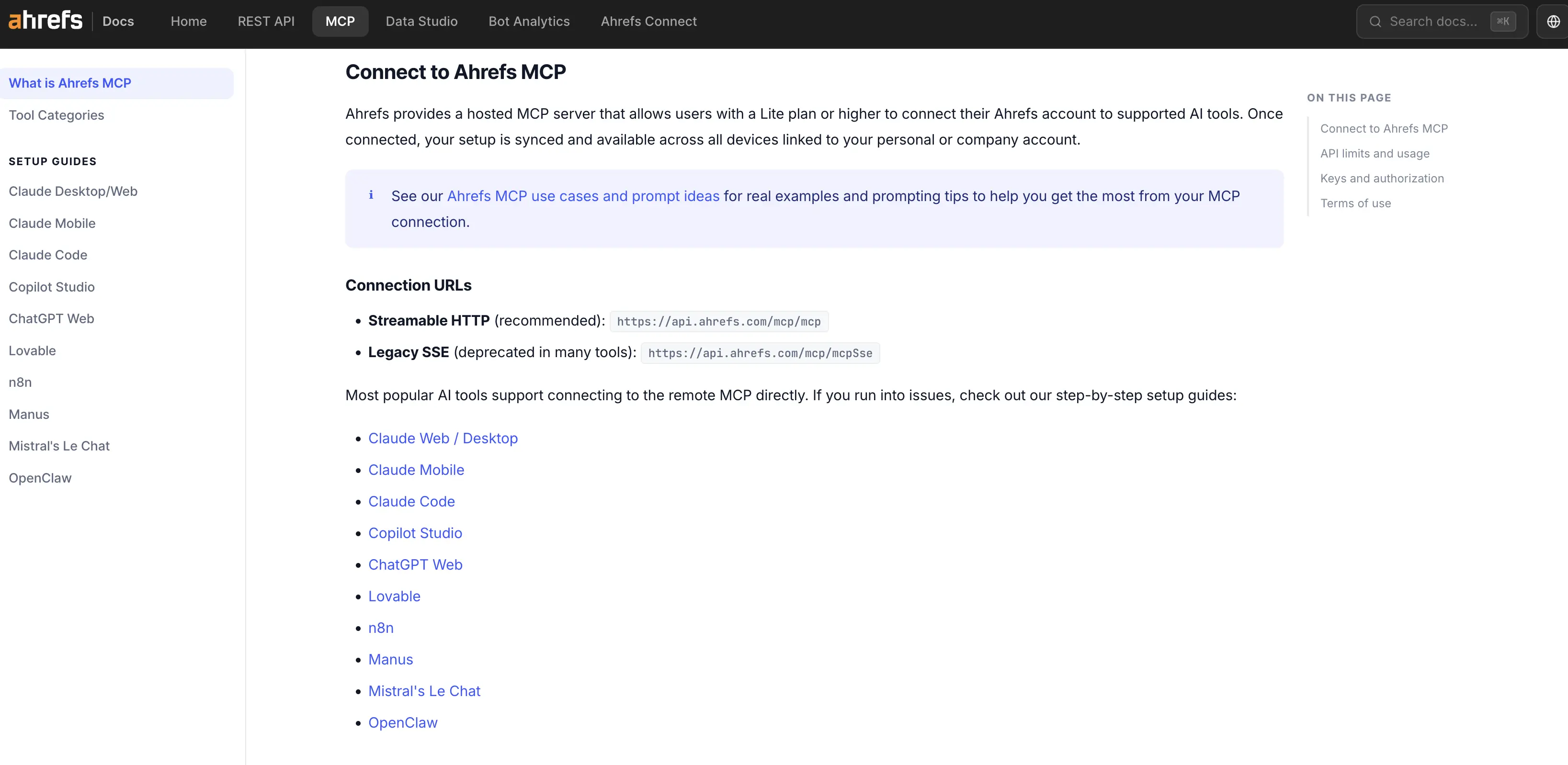 If you are building an AI assisted SEO workflow this year, check for MCP access before you buy, not after.
Do you need a separate tool for AI search visibility
Traditional rank tracking watches your position in Google's ten blue links. It says nothing about whether ChatGPT, Perplexity, or Google's own AI Overviews mention your brand when someone asks a related question.
That is a different metric. It is sometimes called GEO, for generative engine optimization, and none of the six platforms above track it as a first class feature yet.
Profound is the best known dedicated tool for this: it tracks brand mentions and citations across ChatGPT, Perplexity, Claude, and Gemini, and shows what people are actually asking those tools about your category.
Its Starter tier runs $99 a month for 50 tracked prompts, billed yearly, and Growth runs $399 a month for 100. Work out the cost per prompt and Growth lands at roughly double what Starter charges, even though you are only adding two more AI engines, not double the volume. Six tested Profound alternatives price out flatter than that.
One real catch worth knowing before you request a demo: Profound does not publish pricing anywhere on its own site, so every dollar figure floating around for it online is somebody's guess, not a confirmed number. Six tested Profound alternatives publish theirs.
Smaller, cheaper entrants exist too, including Peec AI and Otterly.ai, both built around the same core idea at a lower price point than Profound's enterprise positioning.
If brand mentions and affiliate fraud tracking matter more than pure AI citations, Search Monitor's alternatives cover that adjacent ground with real listed pricing.
Do you need one of these today? If AI search is already sending you real traffic in GSC's Search appearance data, yes. If it is not yet, this is a category worth watching, not one worth paying for blind.
Build your SEO tool stack by budget
Nobody adds up what a real stack costs until the renewal notices land in the same week. Here is what I actually priced in September 2026, tier by tier.
Free: what covers you at zero dollars
Google Search Console plus Screaming Frog's free 500 URL crawl covers indexing, technical errors, broken links, and real click data for a site under roughly 500 pages.
Add Google Keyword Planner for search volume on terms you have not ranked for yet. It costs nothing, but it does need a free Google Ads account, and without an active campaign running, it only shows broad ranges like 10K to 100K instead of an exact number.
Mid budget: the $130 to $300 range
One platform, used well, beats two used badly. Pick one first. SE Ranking's Core plan at $129 a month, or Semrush's SEO plan at $139, covers keyword research, rank tracking, audits, and reporting in a single login.
Add Surfer at $49 a month once you are publishing regularly and want content matched against what already ranks.
Full stack: what an agency actually runs
I added up Ahrefs Standard at $249 a month, Semrush's SEO Plus AI Search Starter at $199, and SE Ranking Growth at $279 a month, or roughly $223 billed annually. Stacked together, before touching a GEO tool, that is $671 a month.
That number rarely shows up next to the individual per tool prices everyone quotes on their own, and it is the real budget conversation worth having before you commit to three subscriptions instead of one done well.
The number that matters is your whole stack, not one line item, which is what the SaaS spend calculator is for.
Who each tool actually fits
If you run a solo blog or newsletter, start with Google Search Console and add Surfer once you are publishing weekly.
If you manage SEO for client accounts, SE Ranking or AgencyAnalytics will save you more per seat than Ahrefs or Semrush at agency scale.
If you also need help with link building, GoPeak can handle the outreach and backlink work for your client accounts.
If you run an ecommerce or Shopify store, prioritize Screaming Frog for catching broken product pages and redirects before Google does.
If you are on a WordPress site with limited time, pair GSC with one paid platform rather than three, since the setup and reporting overhead adds up faster than the subscription cost.
If you are already an enterprise team with a content and revenue platform in place, BrightEdge is built for that integration; confirm the number on a sales call, since none is published.
If your traffic is starting to come from AI answers instead of blue links, this is the year to at least trial a GEO tool like Profound or a cheaper alternative, even if you are not ready to commit.
FAQs
Which SEO tools disclose how they verify their own pricing and data accuracy?
Almost none, directly. Ahrefs, Semrush, SE Ranking, and Screaming Frog all publish pricing directly on their own sites, updated on a visible schedule, which is closer to real disclosure than most GEO tools offer.
Profound and several GEO tools publish no pricing at all, which is worth treating as a flag, not a footnote.
Can I do SEO effectively with only free tools?
Yes, up to a point. Google Search Console plus Screaming Frog's free crawl limit covers a small to midsize site's technical and click data needs completely.
You will hit the wall on competitor backlink data and keyword volume estimates first, since Google does not expose those numbers itself.
How much do SEO tools actually cost per month?
Anywhere from $0 to well over $1,000, depending on scale. A realistic single platform sits between $129 and $299 a month. A full agency stack across two or three tools regularly runs $600 to $700 a month before any GEO add on, per the breakdown above.
Do I need more than one SEO tool, or will one cover everything?
One well chosen platform covers most solo sites and small businesses completely. Most people only need a second tool once the first one truly lacks something specific, like AI search visibility tracking or white label client reporting, not because more tools feel safer.
What is the best SEO tool for beginners?
Google Search Console first, always, since it is free and directly from Google. Once you want keyword and competitor data GSC does not show, SE Ranking's lower price point and simpler interface make it an easier first paid tool than Ahrefs or Semrush.
Which SEO tools let you review AI generated changes before they publish?
This is not standard yet. Most platforms with AI content or optimization features apply suggestions for you to accept or reject at the point of writing, inside tools like Surfer, rather than offering a formal review and rollback history after the fact.
If an approval trail matters for your workflow, ask about it directly before buying; it is rarely on the pricing page.
Where to start
Start with what you already have. If you are only using Google Search Console, that is not a gap to apologize for; it is the correct free foundation. Add one paid platform once you can name the specific thing GSC cannot show you, whether that is competitor backlinks, AI search visibility, or client ready reporting.
Price the whole stack before you add a second tool, not after the renewal email arrives. That single habit would have saved me more than the $187 a month I started this piece with.
Whether any of this pays back depends on hours saved, which the SaaS ROI calculator puts a figure on.
Pricing verified September 2, 2026, from each tool's own official pricing page.