
To launch usage-based pricing for SaaS, pick one pricing unit your customers can predict, like tickets resolved.
Charge a small base fee plus usage, so finance teams still get a fixed floor.
Count every billable event before launch, and decide in writing what happens to failed runs.
Give buyers live usage alerts and spending caps. Then move new customers first, and keep current customers on their old plans for a set period.
AI turned software into something closer to a utility. Every generated answer, resolved ticket, or processed document uses compute.
The vendor pays for that compute whether the customer has one user or a hundred. The money behind this shift is huge.
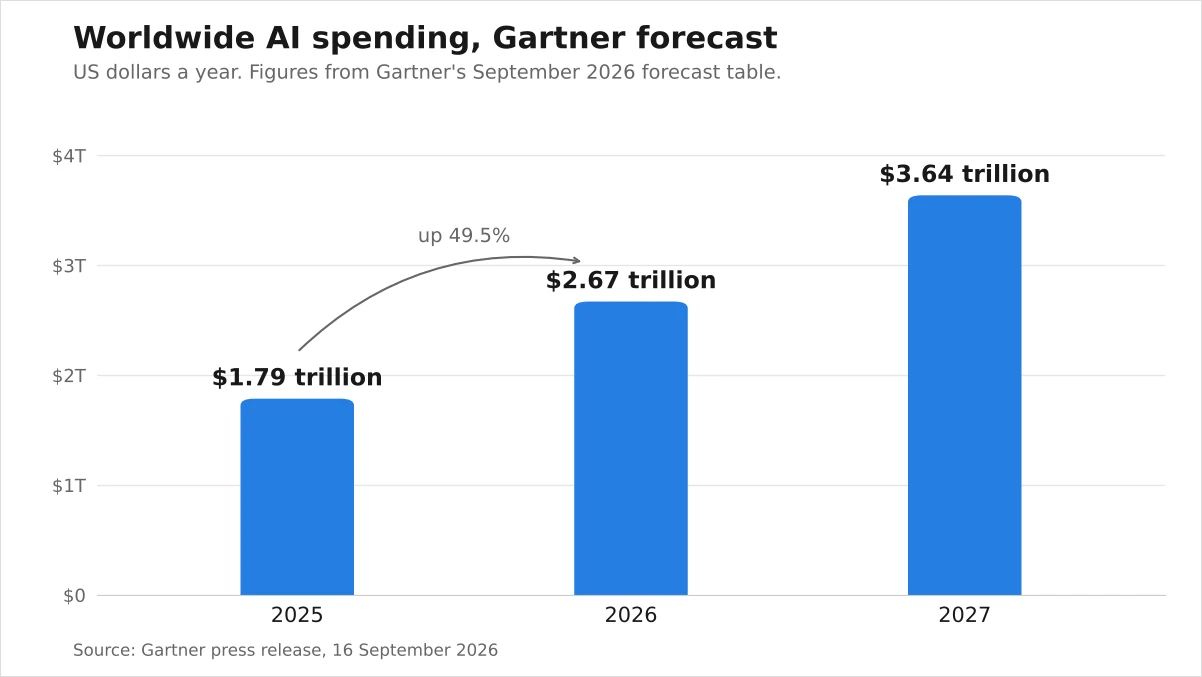
Gartner forecasts worldwide AI spending of $2.67 trillion in 2026, up 49.5% from 2025 (Gartner, September 2026). AI software alone makes up about $462 billion of that total.
Gartner's September 2026 table puts worldwide AI spending at $1.79 trillion in 2025, $2.67 trillion in 2026, and $3.64 trillion in 2027.
So product and finance teams face one question. How do you price a product when your own costs move with every request?
More teams now answer with usage-based pricing for SaaS. Revenue then rises with the work the software does.
What is usage-based pricing, and why does it fit AI products?
With usage-based pricing, customers pay for how much they use the product.
The bill counts units such as API calls, tokens, tasks, or transactions, instead of a flat fee for each user.
For AI vendors, the appeal is simple. Revenue goes up as heavy use pushes their own costs up.
Where pricing per user breaks down
Charging for each user worked when one more user cost almost nothing to serve. AI features changed that.
An AI agent that resolves 5,000 support tickets a month costs far more to run than one that handles 50.
Yet both customers might have the same number of logins.
This shift is moving fast. Gartner predicts up to 40% of enterprise applications will include task-specific AI agents by 2026.
That is up from less than 5% in 2025 (Gartner, August 2025). Once software does the work itself, counting people stops making sense.
Our guide to how agentic AI is changing SaaS covers what these agents do inside everyday tools.
Companies that proved the model
Infrastructure companies made usage pricing normal long before generative AI. Snowflake charges for the compute and storage customers use.
Twilio bills for each message and each minute, and OpenAI prices its API by the token. Buyers accepted a bill that moves because the meter tracks something they value.
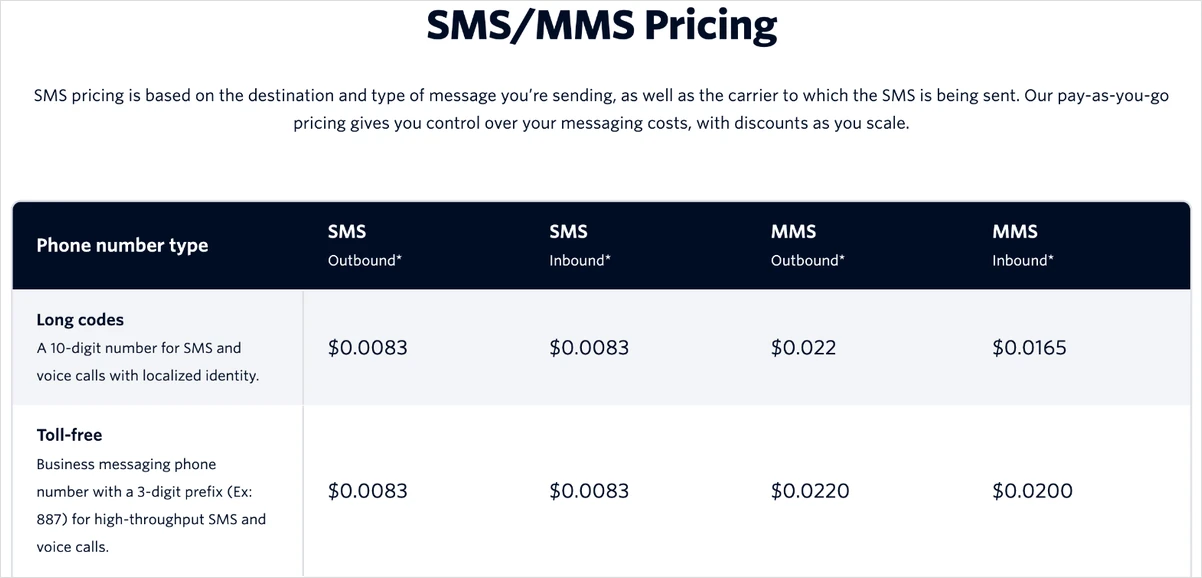
Twilio's US price table shows how plain this can look. One outbound SMS to a US long code number costs $0.0083, as of 27 November 2026. Carrier fees may be added on top.
Twilio prices each SMS on its own: $0.0083 for an outbound SMS on a long code or toll-free number.
A data warehouse and a midsize HR platform sell to very different buyers, though.
Their budgets, buying habits, and approval rules differ a lot. So borrow the approach, and build a price sheet that fits your own buyers.
How to choose the right pricing structure
Decide the structure before you set any price. Four structures are common, and each one suits a different kind of product and buyer.
Hybrid, pure consumption, credits, or outcomes: which model fits?
Hybrid pricing suits most application vendors, while pure consumption suits developer and infrastructure products. Here is how the four compare:
Hybrid pricing: a fixed base fee for the platform or for each user, plus charges for tokens, API calls, or finished tasks. Finance teams get a predictable floor, and the vendor earns more from heavy users.
Pure consumption: no base fee, so customers pay only for what they use. This works best for APIs, developer tools, and infrastructure, where cost rises almost one for one with usage.
Credits: customers prepay for bundles of credits and spend them on generations, reports, or workflow runs.
Checkout gets simpler, and cash comes in sooner. Some buyers find credits confusing, since they have to turn credits back into work in their heads.
Our Make pricing guide shows how one automation tool sells its runs in credits.
Outcome pricing: the customer pays only when the work gets done, such as a resolved ticket. This suits AI agents that finish whole jobs on their own.
For a SaaS company adding AI features to an existing product, hybrid usage-based pricing for SaaS is usually the safest route. The subscription stays in place, and usage becomes the way accounts grow.
Snowflake shows how a free allowance inside a usage plan can look. Its pricing guide says typical cloud services use, up to 10% of daily compute credits, is included for free.
Why procurement can stall a good model
Procurement teams often slow these deals more than end users do. Enterprise buyers usually need a fixed yearly figure before they can approve a contract.
A fully variable quote can sit in legal review for months.
The fix is a committed use contract. The customer prepays for a minimum amount of use at a discount.
The buyer gets a fixed budget, and the vendor gets steady revenue while keeping usage pricing. Twilio does this for large senders.
Its US SMS pricing page offers a discount beyond the standard volume tiers to customers who commit to yearly message volumes.
How to pick a pricing unit and protect your margin
Pricing holds up only when what the customer values matches what you pay to deliver it.
Your pricing unit and the costs behind it decide whether those two line up.
What makes a pricing unit work?
A strong pricing unit is tied to a result the customer can see and predict. In usage-based pricing for SaaS, good examples include tickets resolved, documents processed, reports generated, and minutes transcribed.
Weak units track what happens inside your own systems, such as server hours, database rows, or memory.
Tokens sit in between. Developers understand them well, but a marketing director may have no idea what a million tokens buys.
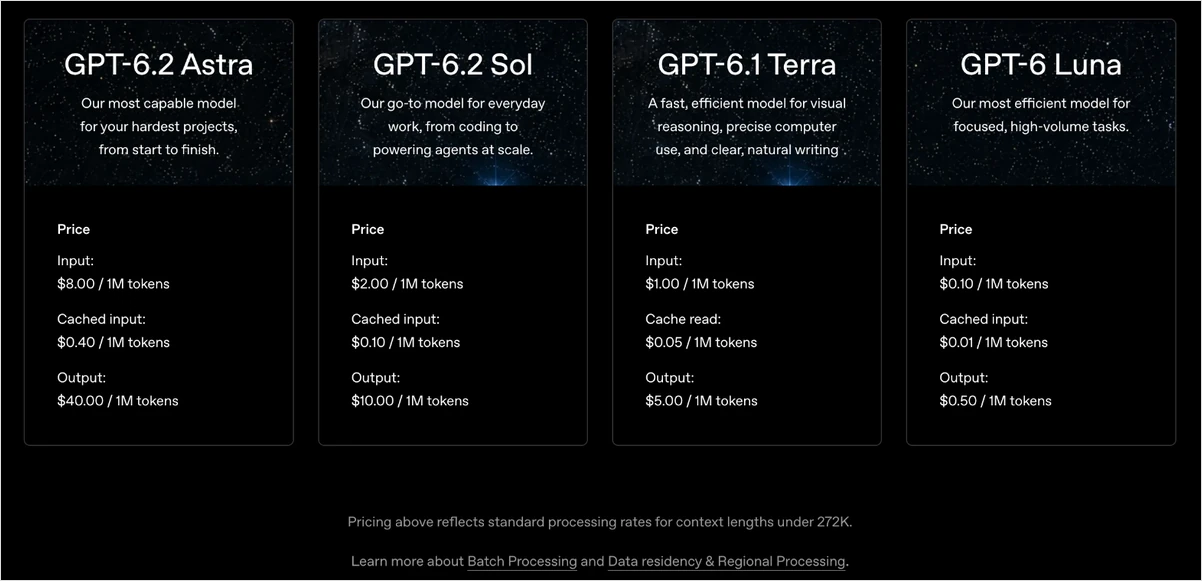
OpenAI's API pricing page shows the token model in full. GPT-6 Luna costs $0.10 for each 1M input tokens, as of 27 November 2026. Its output costs $0.50 for each 1M tokens.
The same page also lists a Batch processing mode at 50% off.
OpenAI prices four API models by the token, from GPT-6 Luna at $0.10 for each 1M input tokens up to GPT-6.2 Astra at $8.00.
A quick test helps here. Ask a customer to guess next month's usage without opening any software.
A confident guess shows the unit works. A blank stare tells you to turn the unit into something closer to their daily work.
How to check your margin on typical and heavy customers
Cost planning is where usage-based pricing for SaaS most often goes wrong. Model and compute costs are real, and that market is growing fast.
Gartner expects spending on generative AI models to grow 117% in 2026. It puts total spending on AI models and platforms at $64 billion this year (Gartner, July 2026).
So work out your cost to serve two customers. One is a typical customer in the middle of your usage range. The other is a heavy customer near the top. Here is a simple example with made-up numbers.
A typical customer pays $500 a month. Serving that customer costs you $150 in model and server bills.
You keep $350, and $350 divided by $500 is 70%. Your gross margin on that customer is 70%.
A heavy customer pays the same $500 a month. Serving that customer costs you $450. You keep $50, and $50 divided by $500 is 10%.
Your gross margin on that customer is 10%.
The table below shows what to check for each group.
Customer | What to check | Usual fix |
|---|---|---|
Typical customer (P50) | Gross margin at the planned price | Set the base fee and included usage to reach a gross margin of about 60% or more |
Heavy customer (P90) | Whether compute costs grow faster than revenue | Add a price for usage over the limit, a usage cap or a bigger plan |
Outliers above P90 | Runaway automations, abuse, broken scripts | Hard limits, slower request speeds, manual review |
AI providers change their model prices often. Check these numbers every quarter, so your margin does not slip without anyone noticing.
How to build the metering and billing stack
A good pricing plan is worth little if your system can't count usage and charge for it correctly.
Customers rarely see this part of the project, and it usually takes the most time.
Tracking every billable event accurately
Record every billable action: API requests, model token counts, storage, compute hours, and finished tasks.
Billing needs tighter tracking than product analytics. A missed event on an analytics dashboard is a rounding error.
In billing, it is lost revenue, and an event counted twice becomes a dispute.
Teams launching usage-based pricing for SaaS for the first time often miss edge cases. Should a failed generation count against the customer's balance?
What about retries, partial results, or very short bursts of use? Real vendors answer these questions in different ways:
Zapier says in its help center that only successful actions count toward task usage, so failed and halted steps cost nothing.
Our Zapier pricing guide shows how those tasks add up on each plan.
Twilio charges a $0.001 failed message processing fee for each SMS that ends in a "Failed" status.
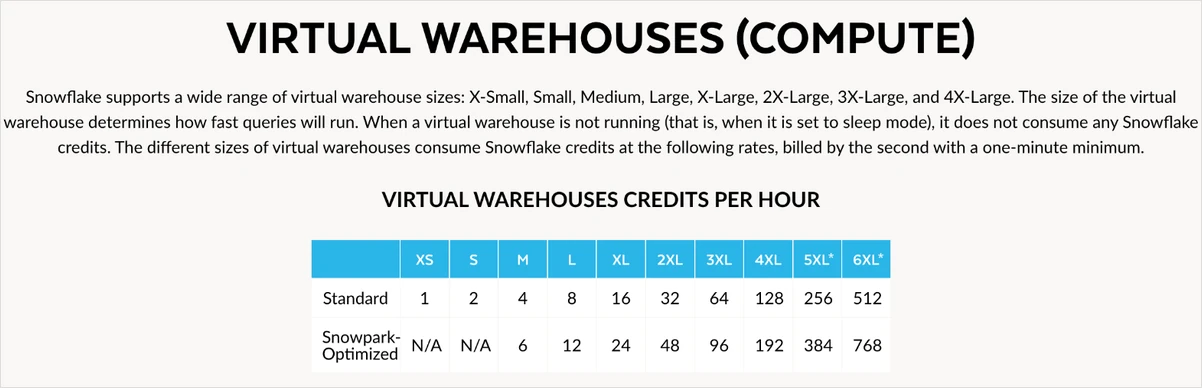
Snowflake bills compute by the second, with a one-minute minimum. A warehouse that is asleep uses no credits at all.
Snowflake lists the credits each warehouse size uses in an hour, from 1 credit for XS to 128 for 4XL on Standard, billed by the second with a one-minute minimum.
Write your own rules down before launch, and have engineering and finance sign off on them. Then publish them where customers can find them, as these three vendors do.
What to look for in a usage-based subscription billing tool
Many older billing systems were built for fixed monthly plans. Making them handle metered charges usually takes a lot of custom code.
A dedicated usage-based subscription billing tool collects usage events, adds them up for each customer, applies your pricing rules, and creates invoices. Your engineers then don't have to build that logic by hand.
The market for usage-based billing solutions for subscription software has grown quickly. It runs from payment companies with billing built in, like Stripe, to billing specialists such as Chargebee and Flexprice.
The two groups are merging. Stripe completed its purchase of Metronome on 14 January 2026, and Adyen completed its purchase of Orb on 1 July 2026.
Teams comparing vendors often benefit from a clear primer on subscription usage-based billing to set out their requirements before booking demos.
Check these capabilities on every shortlist:
Live collection of usage events at the volume you expect in two years, as well as today.
Support for hybrid plans: base fees, included usage, volume tiers, prices for usage over the limit and prepaid credits.
Controls that block or slow usage once a customer hits a limit.
Links to your CRM, accounting, and revenue recognition systems.
Price tests, plus a way to keep current customers on old prices without painful data moves.
Freedom to keep your payment processor. Adyen says Orb will keep working with more than one payment provider in the first phase after the deal. Ask every vendor where it stands.
How to keep customers confident in a variable bill
A surprise invoice is the fastest way to lose trust in usage-based pricing for SaaS. Customers who feel blindsided rarely just pay. They complain, ask for credits or start looking at other tools.
Dashboards, alerts, and spending caps
Clear usage data stops many billing disputes before they start. A live usage dashboard should show current usage, credits left, and an estimated total for the billing period.
Automatic alerts add a second safeguard. For example, send a notice when an account reaches 80% of its monthly credit limit or plan cap.
Letting admins set their own spending limits goes further. A source of worry then becomes a feature buyers like.
Turning usage data into upgrade conversations
The same data that protects customers also helps your account team. A customer who keeps hitting their cap is getting value from the product.
That pattern opens a natural upgrade conversation, and usage trends give sales real numbers to work from.
How to roll out new pricing without losing current customers
Current customers signed up under different terms. A sudden switch to usage-based pricing for SaaS can undo years of goodwill, and a phased rollout lowers that risk.
A typical launch order looks like this:
Start with new customers. Keep current accounts on their old plans for a set period.
Publish a side-by-side cost comparison, so customers can see how the change affects them.
Train sales teams to quote variable deals, and change their pay so it rewards usage growth.
Review results every quarter. Adjust included usage, prices for usage over the limit, or even the pricing unit as real data comes in.
Your first price list is rarely your last. Give pricing a named owner and a quarterly review. Companies that do this get far more from the model than those that set it once and move on.
FAQs
What is the difference between usage-based and subscription pricing?
Subscription pricing charges a fixed fee each month or year, regardless of how much the customer uses.
Usage-based pricing charges for actual use. Many companies now combine the two in a hybrid model, where the subscription covers access and usage charges cover heavier activity.
Is usage based pricing for SaaS right for early stage startups?
Yes, if you sell developer tools or APIs. Pure consumption pricing fits those products well.
Early-stage B2B companies that sell to large enterprises often struggle with it, because those buyers want a fixed yearly cost.
For them, a hybrid plan with a modest base fee is a safer start.
How do AI companies price token-based products?
Most AI companies either pass token costs on with a markup or turn tokens into simpler units such as credits, messages, or tasks.
Charging by the token suits technical buyers who already know the unit. Business buyers usually prefer result-based units they can forecast.
How can customers avoid unexpected usage bills?
Customers need live usage data, automatic alerts at set levels, and spending caps they control.
These tools cut billing disputes and lower the risk of customers leaving over a surprise invoice.
A committed use contract also gives them a fixed baseline.
How long does it take to launch usage based pricing?
The billing and metering work usually takes longer than the pricing plan itself. Companies that use a dedicated billing platform can often launch in weeks.
Teams that build metering themselves may need several months.
A test with a small group of customers before the full rollout adds time, but it prevents costly mistakes.